
What growth hormone peptides actually are
Growth hormone peptides work upstream of the hormone itself. They do not add growth hormone from outside; they signal your pituitary gland to release more of your own.
There are two families. GHRH analogs, such as sermorelin, CJC-1295, and tesamorelin, are modified copies of growth hormone-releasing hormone, the pituitary's natural release signal. Ipamorelin instead acts on the receptor for ghrelin, a hunger hormone that also triggers growth hormone release.
The mechanism is real, and these compounds do push growth hormone and IGF-1 numbers up. But a hormone number is an input, not an outcome. The entire commercial pitch lives in the gap between the two.
The pitch, and why it hooks men in their 40s
The sales line is seductive: your own growth hormone, naturally. More muscle, less fat, faster recovery, all without taking growth hormone directly.
It lands because training results slow down in your 40s. Recovery costs more and progress gets quieter. The question was never whether these compounds move a lab value. The question is whether the lab value changes anything you can see in the mirror or on the bar, and that is where the evidence runs out.
What growth hormone itself does in healthy men
Start with the hormone, because the peptides are selling its effects.
A 2008 systematic review in Annals of Internal Medicine pooled 27 study samples: 303 mostly young, fit people given growth hormone. Lean body mass rose about 2.1 kg, but strength and exercise capacity did not seem to improve, and soft tissue swelling and fatigue were more common. The reviewers concluded that claims that growth hormone enhances physical performance are not supported.
A 2007 review in the same journal looked at healthy older adults: 18 study populations and 220 people given growth hormone. Body composition shifted modestly, with about 2.1 kg less fat and 2.1 kg more lean mass. Adverse events rose: soft tissue swelling, joint pain, carpal tunnel syndrome, breast tissue growth in men, and a somewhat higher chance of diabetes or impaired fasting glucose. The conclusion: growth hormone cannot be recommended as an anti-aging therapy.
Notice the pattern. Lean mass moved; strength did not. If the full hormone cannot deliver strength, a peptide that only nudges it has an even harder case to make.
What the peptides have actually shown
CJC-1295: two small randomized, placebo-controlled trials in healthy adults aged 21 to 61 (Teichman et al., 2006) showed it raised growth hormone and IGF-1 for days after each dose. That is a hormone-level finding. The studies did not measure muscle, strength, or body fat.
Sermorelin combined with growth hormone-releasing peptides: a 2017 retrospective chart review (Sigalos et al.) of 14 men already on testosterone therapy found IGF-1 rose. Again, a blood-level finding, with no muscle or strength outcome and no control group.
Tesamorelin holds the only current FDA approval in this group, and it is narrow: excess abdominal fat in HIV-infected adults with lipodystrophy. That is a specific prescription use, not a muscle plan.
Across the category, a 2026 review in Sports Medicine (Mendias and Awan) covering sermorelin, tesamorelin, CJC-1295, ipamorelin, and other peptides found rigorous human safety data scarce for unapproved peptides, with potential for serious harm. Raising IGF-1 on a lab report is not the same as building muscle.
Safety and legal status, compound by compound
Here is where each compound stands, from FDA's own records:
- Sermorelin: FDA approved GEREF (sermorelin acetate) in 1997 for growth hormone deficiency in children with growth failure; an earlier 1990 GEREF product was a diagnostic test. The maker discontinued it in 2008, and FDA withdrew approval effective June 18, 2009. In 2013 FDA determined it was not withdrawn for reasons of safety or effectiveness. It was never approved for adult muscle gain, fat loss, or anti-aging.
- Tesamorelin: approved in 2010 (EGRIFTA) for one use, reducing excess abdominal fat in HIV-infected adults with lipodystrophy. Its label says it is not for weight loss management and that long-term cardiovascular safety has not been established. Any other use is off-label.
- CJC-1295: not FDA-approved. FDA's compounding safety-risk list names it as nominated but withdrawn, noting potential immune reactions and impurities, and serious adverse events including increased heart rate and a systemic vasodilatory reaction, with limited clinical data.
- Ipamorelin: not FDA-approved. It has been on FDA's list of compounding substances that may present significant safety risks since September 29, 2023, with a potential immune-reaction risk.
- Ibutamoren (MK-677): not a peptide, but a growth hormone secretagogue often sold alongside them. It is on the same FDA risk list, and FDA notes a trial in hip-fracture recovery was stopped early over a potential congestive heart failure signal.
What actually builds muscle
The blueprint is boring, legal, and it works. Progressive resistance training is the stimulus. Enough protein is the raw material. Sleep is when the adaptation happens.
Creatine monohydrate is one of the few supplements with earned standing. The International Society of Sports Nutrition's position stand says studies have consistently shown creatine increases muscle creatine stores, which may explain improvements in high-intensity exercise performance leading to greater training adaptations. It supports training; it is not a hormone and not a peptide replacement.
If you suspect a real hormone problem, ask a qualified clinician for baseline labs and a proper workup. No marketing page can diagnose that.
How to judge a peptide claim
Demand the outcome you care about
Hormone levels are inputs. Muscle, strength, and body composition are outcomes. Most peptide data stops at inputs.
Check the design and the sample
Randomized, placebo-controlled trials beat chart reviews. A retrospective review of 14 men with no control group cannot settle a muscle question.
Do not let one compound borrow another's evidence
Data on one peptide does not transfer to the next. Each molecule needs its own human outcome data.
Read the regulatory record
"Not FDA-approved" means FDA has not verified safety, quality, or effectiveness. FDA's risk-list entries name specific concerns; read them before you accept a pitch.
Respect the ceiling
Even real growth hormone failed to improve strength across 27 study samples in fit young people. A nudge has to clear the same bar with less firepower.
Who this might suit, and who should avoid it
Might suit
- Men with a diagnosed condition where an FDA-approved option exists. Tesamorelin's single approved use is a prescription decision with your doctor, not a purchase.
- Men with persistent symptoms who want hormone labs ordered and interpreted by a qualified clinician rather than a sales team.
- Men on prescribed testosterone therapy who are curious about add-ons and will raise it with their prescriber first.
Should avoid
- Healthy men chasing muscle, fat loss, or recovery. There is no approved use for you and no human evidence these compounds build muscle.
- Anyone with blood-sugar concerns. Real growth hormone carried a somewhat higher chance of diabetes or impaired fasting glucose in healthy older adults.
- Anyone with heart concerns. Tesamorelin's label says long-term cardiovascular safety is not established, and an ibutamoren trial was stopped early over a heart failure signal.
- Anyone considering unapproved compounded products without clinician oversight.
Common questions
Do growth hormone peptides build muscle?
The human studies reviewed here measured growth hormone and IGF-1, not muscle, strength, or body fat. And the hormone they are designed to boost, tested directly in healthy people, added lean mass without adding strength. The muscle-building claim is unsupported.
Is sermorelin still FDA-approved?
No. GEREF was approved in 1997 for children with growth hormone deficiency and growth failure. The maker discontinued it in 2008, and FDA withdrew approval effective June 18, 2009; in 2013 FDA determined it was not withdrawn for reasons of safety or effectiveness. It was never approved for adult muscle gain, fat loss, or anti-aging, and compounded sermorelin is not an FDA-approved product.
What about CJC-1295 and ipamorelin?
Neither is FDA-approved. CJC-1295 appears on FDA's compounding safety-risk list as nominated but withdrawn, with noted immune-reaction and impurity risks and serious adverse events including increased heart rate. Ipamorelin has been on FDA's list of compounding substances that may present significant safety risks since September 2023.
Is tesamorelin different?
Yes, narrowly. It is FDA-approved for one use: reducing excess abdominal fat in HIV-infected adults with lipodystrophy. Its label says it is not for weight loss management and that long-term cardiovascular safety has not been established. Any other use is off-label and requires a prescription.
My IGF-1 went up on labs. Doesn't that prove it is working?
It proves the compound raised a number, which is what it is designed to do. Neither key study measured muscle or strength. A marker is a checkpoint, not a finish line.
What actually works for muscle after 35?
Progressive resistance training, enough protein, consistent sleep, and creatine monohydrate, the best-studied legal supplement in this conversation. If you suspect a genuine hormone problem, get labs with a qualified clinician.
Sources
A legal place to start
A legal, well-studied place to start
If your goal is muscle and strength, creatine monohydrate has far more human research behind it than any peptide on this page. It supports training; it does not replace it.
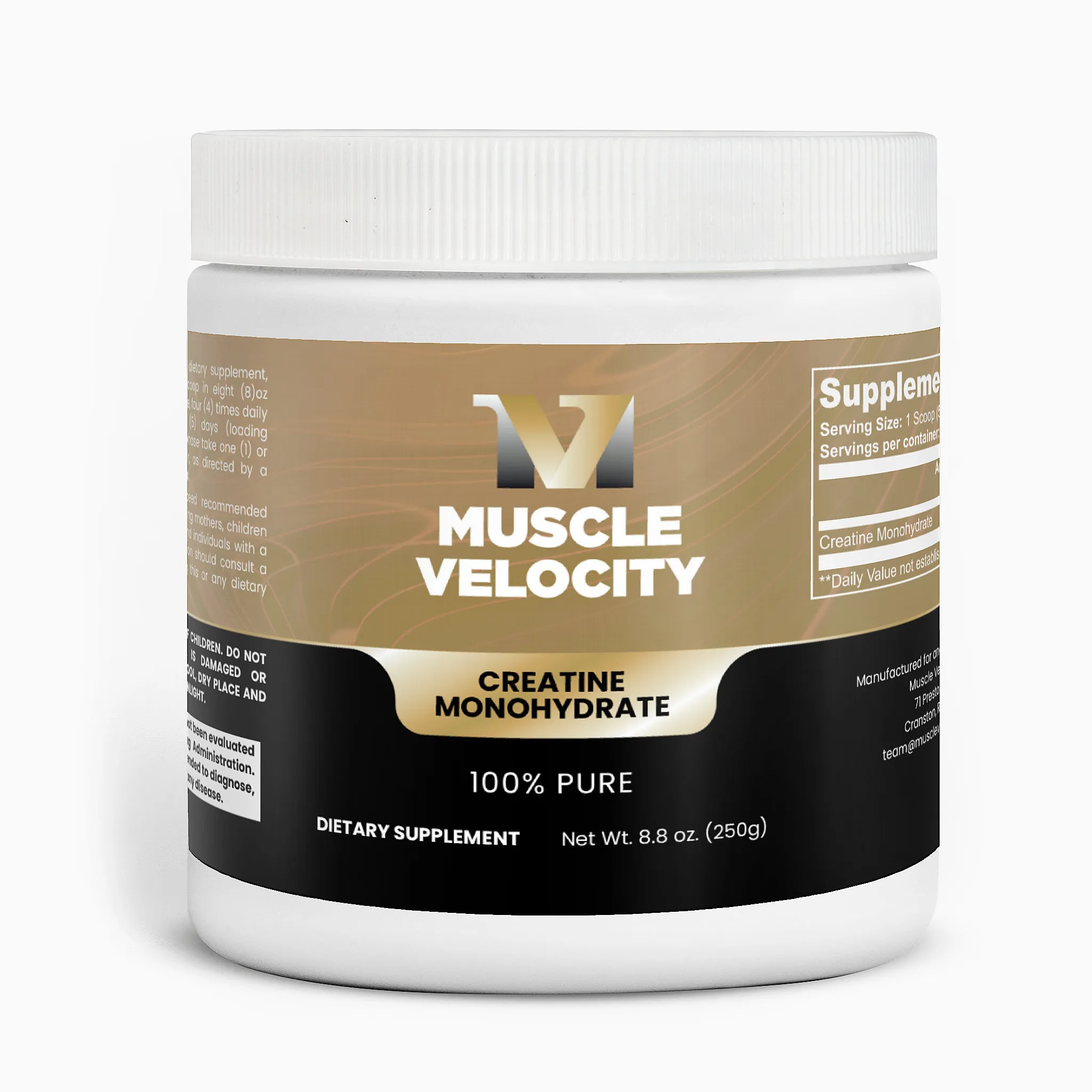
Legal and well studied
Creatine Monohydrate
Single-ingredient creatine monohydrate powder. It supports high-intensity training; it is not a hormone and does not replace one.
View creatineThis guide is education, not medical advice. Talk to a qualified clinician before starting, stopping, or changing any peptide, hormone, or supplement.