
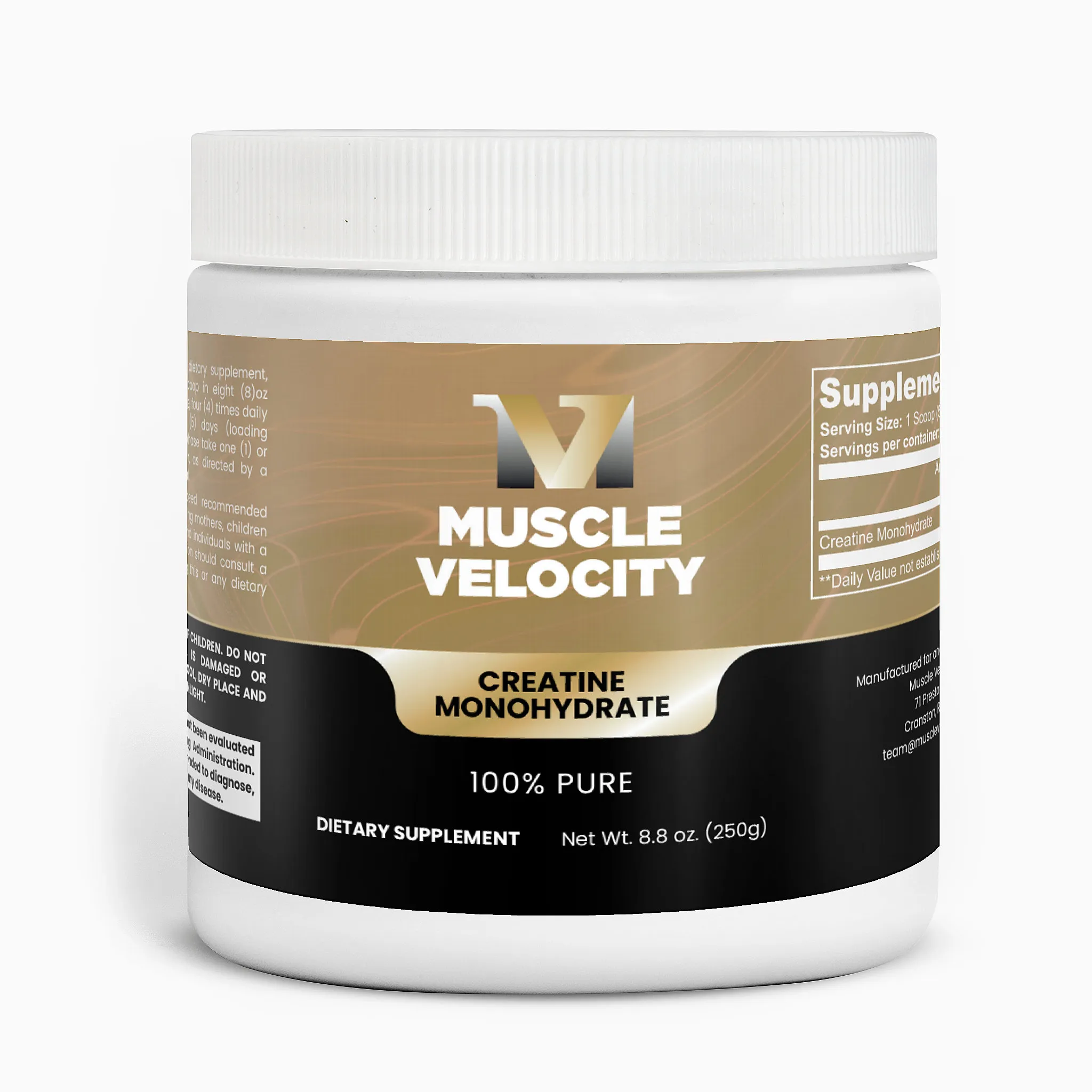
Simplest protocol
Creatine Monohydrate
Single-ingredient micronized monohydrate for a straightforward daily creatine routine.
View creatine monohydrateMore useful work
Creatine does not build muscle while you sit still. It can help you produce more of the training that does.
This guide is part of our creatine use-case guides track. For continuity, read creatine monohydrate and creatine for men over 40.
The short answer
Creatine can support muscle growth and strength by increasing phosphocreatine stores, helping regenerate ATP during repeated high-intensity efforts. That can improve the amount or quality of work you sustain in resistance training. Over time, better training can contribute to strength and lean-mass gains. The supplement amplifies a sound program; it does not replace progressive overload, adequate protein, calories, or recovery.
Decision brief
Creatine's clearest value is supporting repeated high-intensity work.
Long-term muscle gain still depends on progressive resistance training and nutrition.
Early weight gain includes water within muscle and should not be labeled pure new tissue.
Monohydrate remains the evidence-based baseline against which premium forms should be judged.
Muscle Velocity standard
Both formulas provide 5 g of creatine monohydrate. Choose the single-ingredient powder for the simplest protocol, or the hydration blend when sodium, potassium, and magnesium fit the demands of your training.
Simplest protocol
Single-ingredient micronized monohydrate for a straightforward daily creatine routine.
View creatine monohydrate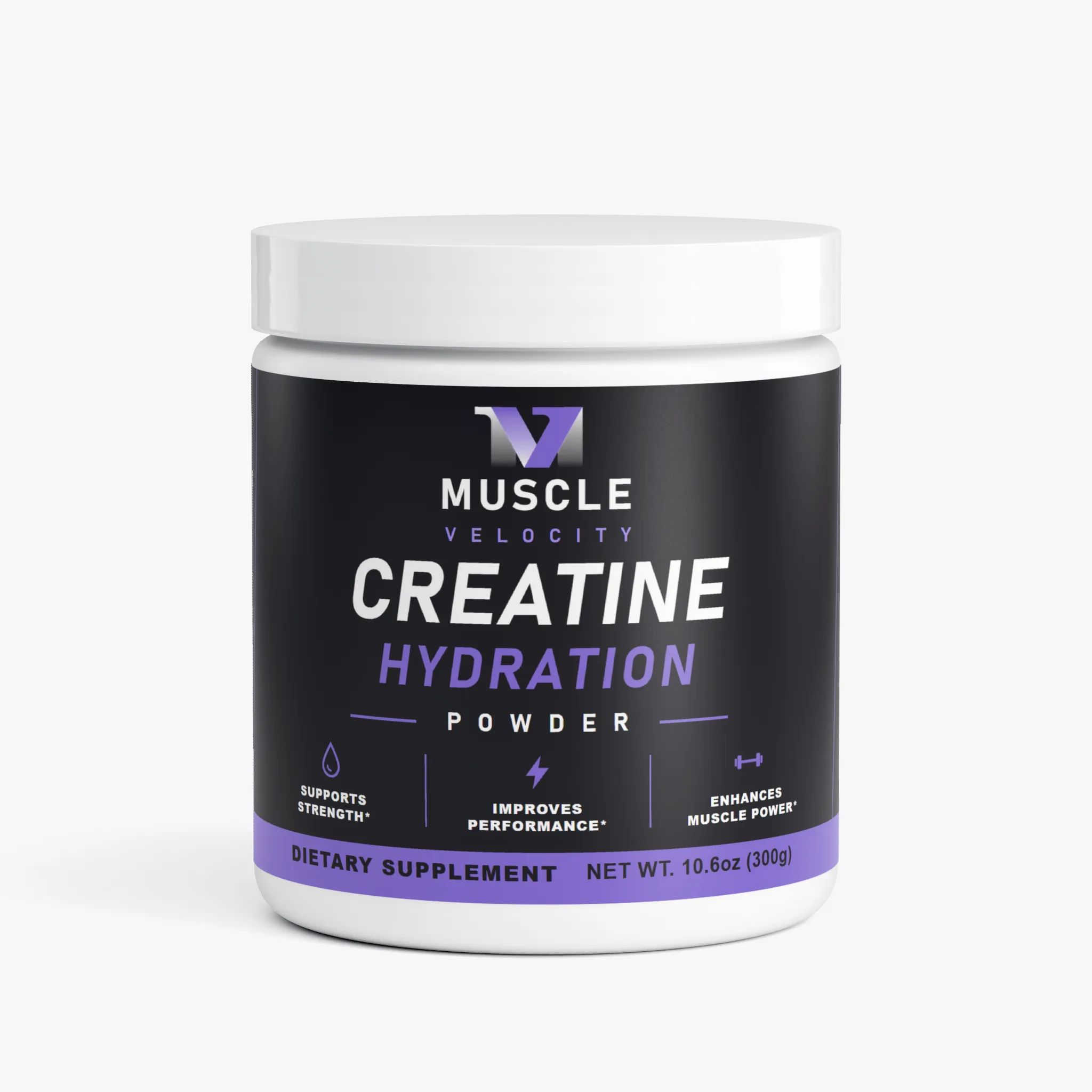
Training + hydration
5 g of creatine plus sodium, potassium, and magnesium when hydration support is part of the training plan.
View hydration formulaEducational content only. Supplements are not a substitute for medical care. Speak with a qualified healthcare professional when a condition, medication, or persistent symptom is involved.
A hard set drains readily available ATP quickly. Phosphocreatine helps rebuild it during short, intense work and between efforts. Supplementation can raise muscle creatine stores, giving that rapid-energy system more capacity.
The effect is not limitless. Creatine does not turn ten clean repetitions into twenty. It may help preserve output across repeated sets or support a small increase in productive volume. Small advantages become useful when they compound across months of training.
This is why creatine belongs beside a training plan, not in place of one. If the program never progresses, the extra capacity has nowhere useful to go.
Creatine can increase water held inside muscle early in the process. That may raise body weight and make muscle look fuller. It is a real physiological effect, but it should not be marketed as several pounds of newly built contractile tissue.
Longer-term changes are judged differently: progressive strength, repeatable training volume, body measurements, and body-composition trends. A single scale reading cannot tell you which tissue changed.
Creatine works inside a larger system. Training supplies the signal. Protein supplies amino acids. Total calories influence whether weight rises or falls. Sleep and recovery determine whether you can repeat the work.
If those inputs are unstable, adding more supplements creates noise. Start with a program that records sets, repetitions, and load. Add creatine as one controlled variable. Then decide whether your training log justifies keeping it.
Buying checklist
Creatine monohydrate has the deepest research base for high-intensity performance and training adaptation.
The product should make a consistent daily maintenance routine practical without requiring many capsules or scoops.
Avoid formulas that hide creatine inside a proprietary matrix whose total amount cannot be verified.
Compare the price of the amount you will actually use, not the sticker price or number of partial scoops.
Fit check
Common questions
Creatine is better understood as a training aid. By supporting rapid energy production during repeated high-intensity work, it can help you sustain productive training. Muscle growth still depends on the training stimulus, nutrition, and recovery.
The outcomes are connected. Creatine's immediate role is in the rapid-energy system used during hard efforts. Better repeated performance can support strength progression and, over time, the training volume associated with muscle growth.
Creatine does not directly add body fat. Early scale increases are commonly associated with changes in body water. Fat gain depends primarily on sustained energy balance.
No special blend has displaced creatine monohydrate as the evidence-based standard. A transparent monohydrate product is sufficient for a straightforward protocol.
Evidence desk
Continue the creatine guide