
Simplest protocol
Creatine Monohydrate
Single-ingredient micronized monohydrate for a straightforward daily creatine routine.
View creatine monohydrateStrength after 40
Creatine is not a shortcut back to your twenties. It is a well-studied way to support the hard training that preserves strength as you age.
This guide is part of our creatine use-case guides track. For continuity, read creatine monohydrate and creatine for brain health and focus.
The short answer
For a healthy man over 40 who resistance trains, creatine monohydrate is a practical, evidence-backed option for supporting repeated high-intensity effort and training adaptations. The strongest case is not that age suddenly makes creatine essential. It is that maintaining muscle and strength matters more with age, while creatine can help resistance training produce more useful work.
Decision brief
Creatine works best as support for consistent resistance training, not as a replacement for it.
Plain creatine monohydrate remains the most extensively studied form.
A steady daily dose can saturate muscle stores without a loading phase.
Kidney disease, prescription medications, or unresolved health concerns warrant a clinician conversation first.
Muscle Velocity standard
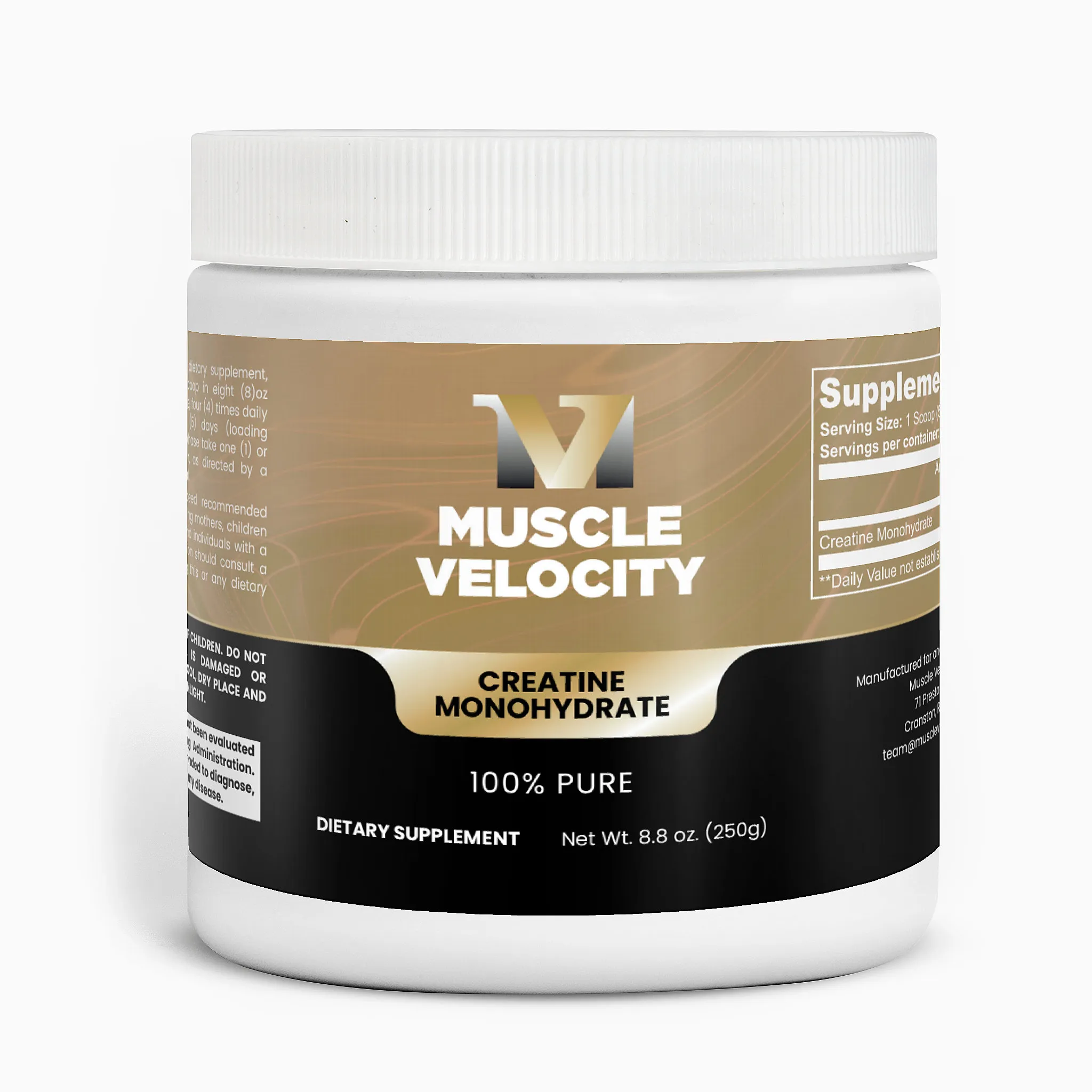
Muscle Velocity Creatine is a single-flavor micronized creatine monohydrate powder built for a straightforward daily routine.
Simplest protocol
Single-ingredient micronized monohydrate for a straightforward daily creatine routine.
View creatine monohydrateEducational content only. Supplements are not a substitute for medical care. Speak with a qualified healthcare professional when a condition, medication, or persistent symptom is involved.
Past 40, the useful question is not whether creatine can make you feel younger overnight. It cannot. The useful question is whether it can help you maintain the training quality required to protect strength, lean tissue, and physical capacity.
Creatine increases the pool of phosphocreatine available to regenerate ATP during short, hard efforts. In practice, that matters most during repeated sets of lifting, sprint work, and other high-intensity training. More quality work over time can support better training adaptations.
Research in older adults is generally most favorable when creatine is paired with resistance training. That distinction matters. A scoop in water does not replace progressive loading, enough protein, or recovery.
Expect a training aid, not a stimulant. Creatine does not create an immediate rush. Its effect builds as tissue stores rise, and individual response varies with diet, baseline stores, muscle-fiber profile, and training.
Scale weight may rise because creatine increases water held within muscle. That is not the same thing as gaining body fat, and it is one reason the mirror, waist measurement, and training log are better judges than scale weight alone.
The standard approach is deliberately boring: use creatine monohydrate consistently. A loading phase can saturate stores faster, but it is optional. Taking a smaller daily amount reaches the same destination more gradually and may be easier for the stomach.
Consistency matters more than timing. Choose a time you can repeat, mix the product thoroughly, and judge it over several weeks alongside a stable training plan. If your program, sleep, and diet change every few days, you will not know what the supplement contributed.
Buying checklist
The reference form used across the largest body of performance and safety research.
The label should state the amount of creatine per serving without hiding it inside a proprietary blend.
Look for a named testing program or an accessible certificate rather than an unsupported badge.
Powder is usually simple and economical; convenience only matters if the full serving remains practical.
Fit check
Common questions
Creatine is generally well tolerated by healthy adults when used as directed, but personal medical history matters. Men with kidney disease, those taking medications that affect kidney function, or anyone managing a medical condition should speak with a qualified clinician before using it.
A commonly studied maintenance approach is 3 to 5 grams of creatine monohydrate per day. A loading phase is optional rather than required. Follow the product label and seek individualized guidance when health conditions or medications are involved.
Creatine should not be sold as a testosterone booster. Its established role is supporting rapid energy production during high-intensity work, which can help training quality. Hormonal claims require separate evidence.
Daily consistency is the simplest way to maintain tissue stores, including on rest days. Timing is less important than taking it regularly.
Evidence desk
Continue the creatine guide