
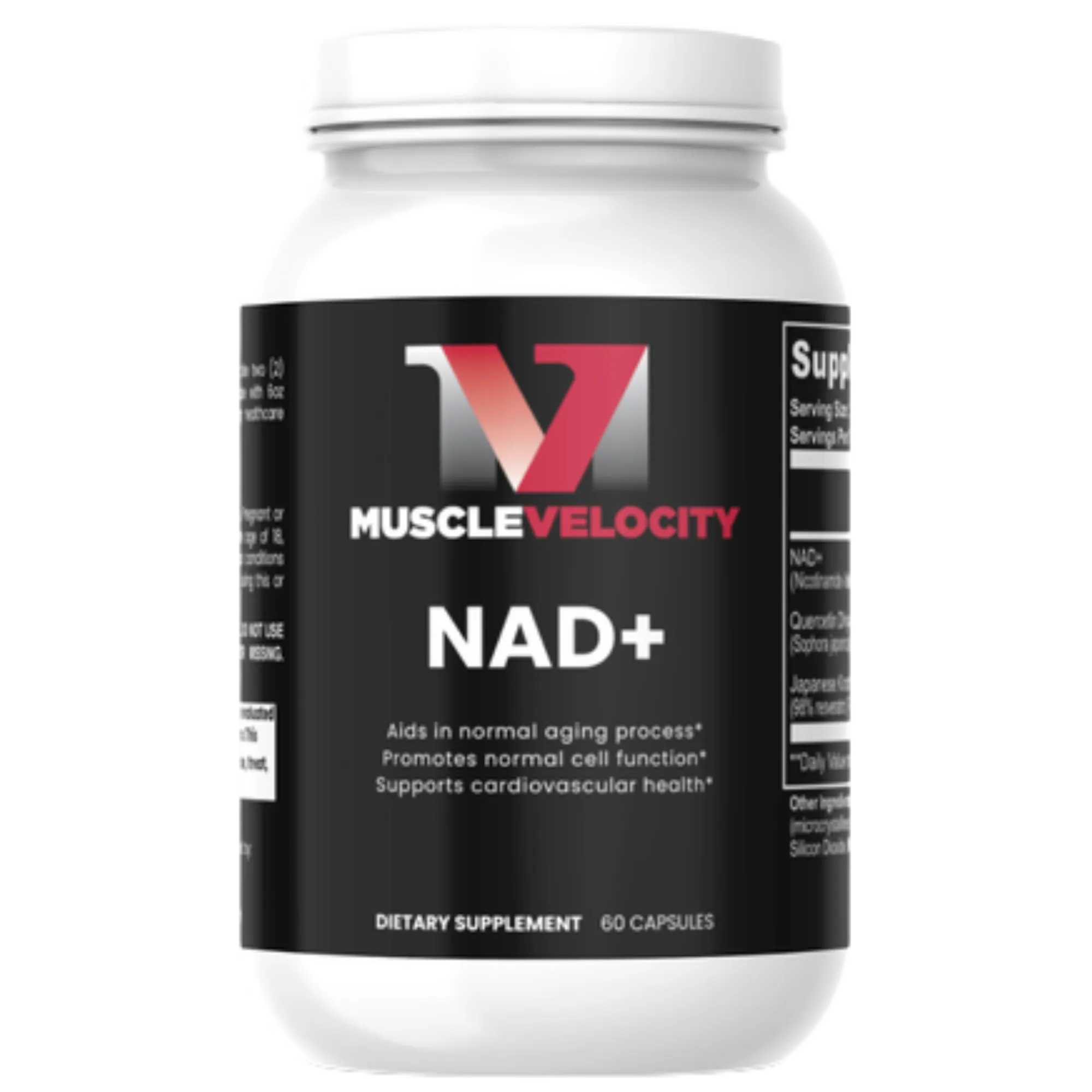
Daily cellular protocol
NAD+
500mg of NAD+ supported by Quercetin and Resveratrol, dosed once daily for cellular energy and metabolic health.
View NAD+What testing found
This is the single most useful thing to know before spending money in this category, and it almost never appears in a product comparison.
This guide is part of our NAD+ supplement guides track. For continuity, read our third-party tested NAD+ and best oral NAD+ supplements.
The short answer
When Sandalova and colleagues assayed 18 commercial NMN products for GeroScience in 2024 using HPLC-QqQ-MS, measured content ranged from nothing detectable up to 11.2% above the adjusted label claim. Only seven of the 18 landed within 10% of what the label said. Three contained no detectable NMN whatsoever. Purity is not a premium feature in this category — it is the baseline risk, and a lot-specific certificate of analysis is the only real protection a buyer has.
Decision brief
Only 7 of 18 assayed commercial NMN products fell within 10% of their label claim.
Three products contained no detectable NMN at all.
Measured content spanned from non-detectable to 11.2% above claim.
A supplier document for the raw ingredient is not the same as a test of your bottle.
Muscle Velocity standard
500mg of NAD+ with Quercetin and Resveratrol. Stated dose, and a supply chain we expect you to verify rather than trust.
Daily cellular protocol
500mg of NAD+ supported by Quercetin and Resveratrol, dosed once daily for cellular energy and metabolic health.
View NAD+Educational content only. Supplements are not a substitute for medical care. Speak with a qualified healthcare professional when a condition, medication, or persistent symptom is involved.
Sandalova and colleagues bought 18 commercial NMN products — 15 conventional and 3 liposomal — produced and marketed internationally, and analysed them by HPLC-QqQ-MS with five aliquots per sample. That is a rigorous method applied to products a normal buyer could have purchased.
Measured NMN content, expressed against the adjusted label claim, ranged from −100% to +11.2%. Only seven of the eighteen were within 10% of label. Three — identified in the paper as NMN#15, NMN#16 and NMN#18 — had no detectable NMN.
The same paper tested Urolithin A products and found a comparable spread, which suggests this is a category-wide supply-chain problem rather than something specific to one compound.
Most content in this space argues about precursor choice, liposomal delivery, and dosing schedules. Those arguments assume the bottle contains what it says. On this evidence, that assumption fails more often than it holds.
Consider the arithmetic. If you carefully select a precursor, calculate a dose inside the studied range, and run a disciplined twelve-week protocol using a product with no detectable active compound, you have run a twelve-week placebo trial at full price and drawn a conclusion about the wrong thing.
That is why verification belongs first in the buying sequence, not last. Every other decision is downstream of whether the product is real.
Ask for a certificate of analysis tied to your lot number. This is the crucial distinction: brands frequently supply a certificate from the raw-ingredient supplier, which describes a batch of powder somebody else tested, not the bottle you are holding.
Prefer brands that publish testing routinely rather than producing it when challenged. Routine publication is a standing commitment; on-request documents are a customer-service response, and the two reflect different confidence in the supply chain.
Check what was tested for. Identity and quantity of the active compound is the minimum. Contaminant screening is a further signal that a company treats verification as part of manufacturing rather than as marketing.
Buying checklist
Not the ingredient supplier's document. The test has to correspond to the bottle you received.
Brands that publish as standard are making a stronger statement about their supply chain than those that respond when pushed.
The certificate should confirm what the compound is and how much is present. Contaminant screening is a bonus signal.
The assayed products with no detectable active compound existed at a price. Cheap in this category has a documented failure mode.
Fit check
Common questions
Frequently not. A 2024 GeroScience analysis of 18 commercial NMN products found measured content ranging from non-detectable to 11.2% above the adjusted label claim, with only seven within 10% of label and three containing no detectable NMN at all.
It is a laboratory report on a product's identity and content. Ask specifically for one matched to your lot number. Brands often supply a raw-ingredient supplier's certificate instead, which describes a batch of powder rather than the bottle you were sent.
Lot-specific third-party testing published routinely rather than on request, confirming both identity and quantity of the active compound. Beyond that, a stated dose inside the studied range and claims that stop at raising NAD+. Brand reputation is a much weaker signal than paperwork.
Price is not a reliable proxy. The GeroScience analysis found wide variance across commercially available products without price being the organising factor. Verification documents are the check; cost is not.
Evidence desk
Continue the NAD+ guide
Dose, timing, and how to verify a label before you pay for it.
All NAD+ guides