
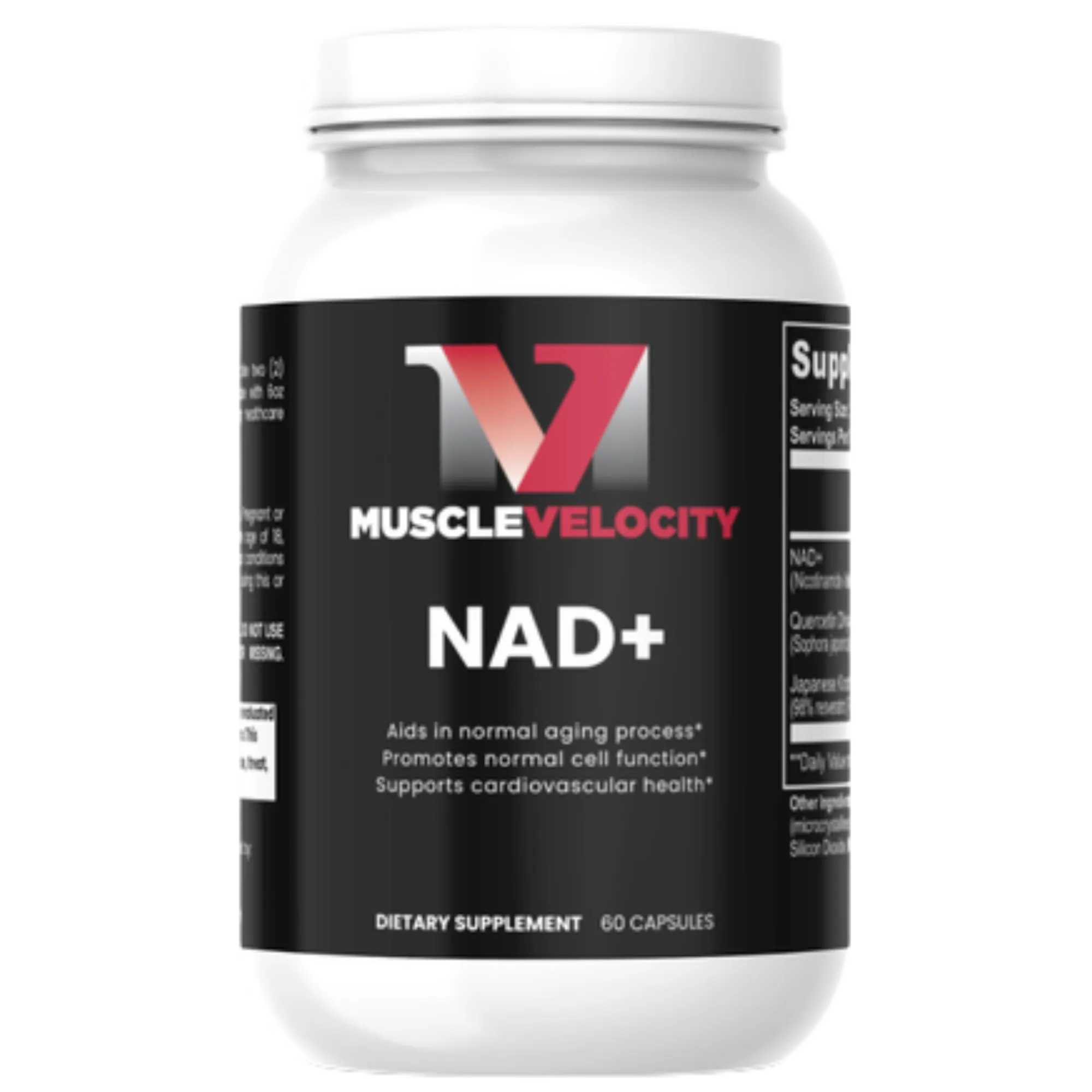
Daily cellular protocol
NAD+
500mg of NAD+ supported by Quercetin and Resveratrol, dosed once daily for cellular energy and metabolic health.
View NAD+Inside the capsule
The capsule is the easy part. What is inside it varies more than most buyers would believe.
This guide is part of our NAD+ supplement guides track. For continuity, read our NAD+ capsules and NAD+ supplements for energy.
The short answer
Human NMN trials have used 150–1200mg per day over four to twelve weeks, with blood NAD+ rising consistently and outcome measures moving much less consistently. The bigger practical risk is not dose selection but content: when Sandalova and colleagues assayed 18 commercial NMN products, measured content ranged from nothing detectable to slightly above claim, and three products contained no detectable NMN. Pick a dose inside the trial range, then verify the product actually contains it.
Decision brief
Published NMN trials used 150–1200mg/day across four to twelve weeks.
Independent assay of 18 commercial products found only seven within 10% of label claim.
Three of those products contained no detectable NMN at all.
A lot-specific certificate of analysis is the only meaningful purity check available to a buyer.
Muscle Velocity standard
500mg of NAD+ with Quercetin and Resveratrol, in a fixed daily dose. Stated amount, verifiable content, no guesswork.
Daily cellular protocol
500mg of NAD+ supported by Quercetin and Resveratrol, dosed once daily for cellular energy and metabolic health.
View NAD+Educational content only. Supplements are not a substitute for medical care. Speak with a qualified healthcare professional when a condition, medication, or persistent symptom is involved.
There is no established optimal NMN dose. The 2024 systematic review of physical-performance trials covered ten randomized studies and 437 participants at 150–1200mg/day. A separate 2024 metabolic meta-analysis covered eight trials and 342 adults at 250–2000mg/day.
Across both, the consistent finding is that NAD+ rises. The metabolic review found NAD+ increased in five of eight trials while fasting glucose, insulin, HbA1c, lipids, BMI, and blood pressure showed no significant change. The performance review described strength and aerobic improvements as nonsignificant.
The practical reading is that landing somewhere inside the studied range matters more than optimising within it, because the outcome data is not precise enough to support fine-tuning.
Sandalova and colleagues, publishing in GeroScience in 2024, bought 18 commercial NMN products and analysed them by HPLC-QqQ-MS with five aliquots per sample. This is the study worth knowing about before you spend anything in this category.
Measured NMN content ranged from non-detectable up to 11.2% above the adjusted label claim. Only seven of the 18 fell within 10% of what the label said. Three contained no detectable NMN whatsoever.
That is not a rounding-error problem. It means a meaningful share of the market is selling something other than what is printed on the bottle, and no amount of reasoning about dose protects you from buying one of them.
Ask for a certificate of analysis tied to your lot number, not a generic PDF from the brand's ingredient supplier. Those two documents look similar and mean very different things.
Prefer products that publish testing routinely rather than on request. A company that treats verification as standard practice is making a different bet on its own supply chain than one that treats it as a customer-service escalation.
Then run the protocol properly: a consistent dose inside the studied range, taken daily, for the eight to twelve weeks the trials ran. Anything shorter tells you nothing regardless of what is in the capsule.
Buying checklist
Not a supplier document for the raw ingredient. The test needs to match the bottle in your hand.
150–1200mg/day covers the published performance trials. Precision beyond that is not supported by the outcome data.
Brands that publish results as standard are making a stronger claim about their supply chain than brands that supply them on request.
Check how many capsules a studied dose actually requires. Cost per gram often looks very different afterwards.
Fit check
Common questions
Published trials used 150–1200mg/day for physical performance and 250–2000mg/day for metabolic outcomes. No optimal dose has been established, so landing inside the studied range and staying consistent matters more than fine-tuning the number.
Ask for a certificate of analysis matched to your lot. A 2024 GeroScience analysis of 18 commercial NMN products found only seven within 10% of label claim, and three with no detectable NMN. Supplier documents for raw ingredients are not the same as testing your bottle.
Blood NAD+ rises within weeks, but the trials that measured outcomes ran four to twelve weeks. Judge a protocol at eight weeks on a consistent daily dose, and be aware that several reviews found outcome improvements that did not reach statistical significance.
Capsules deliver a fixed dose without measurement error, which makes a personal trial easier to interpret. Powder can be cheaper per gram but reintroduces weighing. No trial evidence favours either on effectiveness.
Evidence desk
Continue the NAD+ guide
What is actually in the bottle, and whether the delivery claims hold up.