
Simplest protocol
Creatine Monohydrate
Single-ingredient micronized monohydrate for a straightforward daily creatine routine.
View creatine monohydrateForm: HCl vs mono
HCl dissolves better. Monohydrate has the trials. One of those facts should decide your purchase.
This guide is part of our creatine use-case guides track. For continuity, read creatine monohydrate and micronized creatine monohydrate.
The short answer
Creatine hydrochloride dissolves far better in water than creatine monohydrate. That is a real, measured chemistry difference, and it is the only one with evidence behind it. No human trial in the review literature has shown that creatine HCl raises muscle creatine, strength, or performance more than monohydrate. HCl products are usually sold in smaller servings on the claim that you need less because it absorbs better, and that claim has not been tested in people. Creatine monohydrate is the form behind nearly all the research. Buy monohydrate unless you have a specific stomach reason and want to run an experiment on yourself.
Decision brief
The one proven difference is solubility. Creatine HCl dissolves far more readily in water.
No human trial in the reviews shows HCl beating monohydrate in the muscle or in the gym.
The smaller-serving claim for HCl rests on solubility, not on a trial of muscle uptake.
Monohydrate carries the evidence base for both effectiveness and tolerability.
Muscle Velocity standard
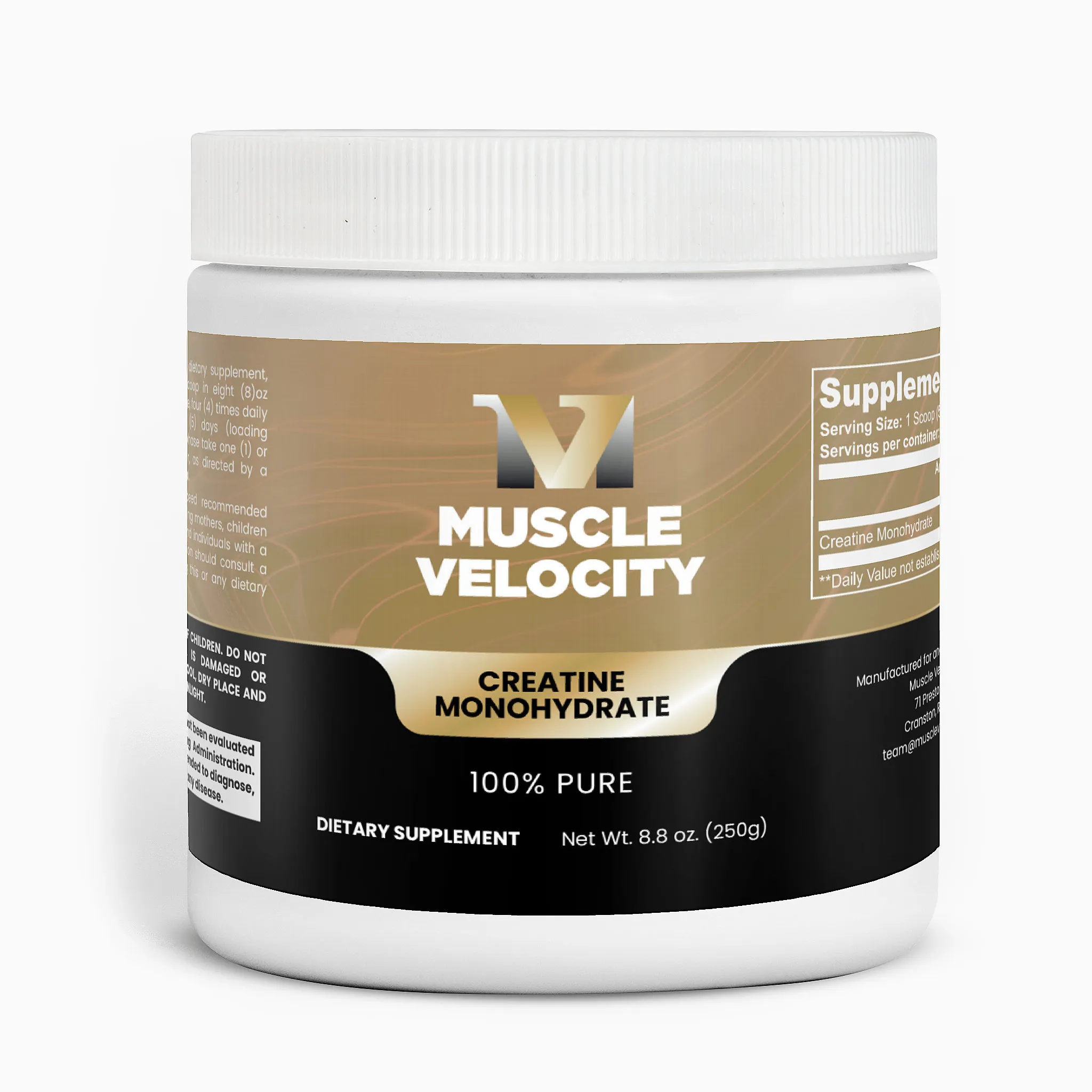
Muscle Velocity Creatine is micronized creatine monohydrate: the form nearly every creatine trial used, milled finer so it mixes clean.
Simplest protocol
Single-ingredient micronized monohydrate for a straightforward daily creatine routine.
View creatine monohydrateEducational content only. Supplements are not a substitute for medical care. Speak with a qualified healthcare professional when a condition, medication, or persistent symptom is involved.
A 2010 chemistry study measured how creatine behaves when bound to different acids. Creatine hydrochloride dissolved in water many times more readily than creatine monohydrate. That result is real and repeatable, and it is where every HCl marketing claim starts.
Solubility matters for two things: how the powder mixes, and possibly how it sits in a sensitive stomach. It says nothing about how much creatine reaches the muscle. A chemistry study in a beaker is not a trial in a person.
Creatine monohydrate is the form used in the large majority of creatine trials. The ISSN position stand names it the reference form and states that no other form has been shown to be more effective.
A 2011 review looked specifically at the newer forms, including creatine salts, and found none with evidence of greater effectiveness than monohydrate. If a brand cites a study for HCl, ask whether it measured muscle creatine against monohydrate at a matched amount. In the reviews that exist, that comparison has not gone HCl's way.
HCl products are typically sold at a fraction of the monohydrate serving, with the explanation that better solubility means better absorption, so you need less. The first half is chemistry. The second half is an assumption.
The ISSN position stand describes creatine monohydrate as already highly bioavailable, which leaves little room for another form to improve on. Until a human trial shows a small HCl serving raising muscle creatine as much as a research-range monohydrate serving, the small serving is a marketing position, not a dosing fact.
Gram for gram of actual creatine, the comparison is the one the smaller HCl serving hides: a tub looks like it lasts longer than it does. Compare the grams of creatine in a serving and the number of servings in the container, not the size of the tub or the headline price.
Monohydrate is the studied form and the one with the tolerability record. Do the per-gram math on the two labels in front of you, and the comparison is not close.
Buying checklist
Creatine monohydrate is the reference form. Any other form should come with a human trial, not a solubility chart.
Compare the creatine in a serving, not the serving size. A smaller scoop is only a bargain if a trial shows it does the same job.
Better absorbed, more bioavailable, no loading needed: each one needs a study in people, measured against monohydrate.
Fit check
Common questions
Only at dissolving in water. No human trial in the review literature shows HCl raising muscle creatine or performance more than monohydrate, and monohydrate has the far larger evidence base.
That is the claim on most HCl labels, and it rests on solubility rather than on a trial of muscle uptake. Until a human study shows a small HCl serving matching a research-range monohydrate serving, there is no evidence for it.
Its solubility makes that plausible, but no trial has tested it. If monohydrate bothers your stomach, a micronized powder, a smaller serving split across the day, or taking it with a meal are the first things to try.
Creatine monohydrate. It is the studied form and the one with the tolerability record, and the per-gram label math usually favors it. Consider HCl only if you have a specific stomach reason and want to experiment on yourself.
Evidence desk
Deepen your understanding with these specific protocols.
Continue the creatine guide