
Simplest protocol
Creatine Monohydrate
Single-ingredient micronized monohydrate for a straightforward daily creatine routine.
View creatine monohydrateRoutine: timing
Before the workout, after it, with breakfast, or at bedtime. The research says the clock matters far less than the calendar.
This guide is part of our creatine use-case guides track. For continuity, read creatine monohydrate and creatine loading phase.
The short answer
Take creatine at the time you will repeat every day. Consistency beats timing, because creatine works by filling muscle stores over weeks, not by acting in the hour after you swallow it. The one small trial that compared before versus after training leaned toward after, and the difference was small. Taking it with a meal that has carbohydrate and protein may raise how much your body retains. Rest days count. Before bed is fine, because creatine is not a stimulant, though no trial has tested bedtime specifically.
Decision brief
Creatine saturates muscle over weeks. The timing of a single dose barely moves the needle.
One small trial leaned toward post-workout. The gap was small, and the review literature calls timing a minor factor.
Carbohydrate and protein taken alongside creatine increased retention in a controlled study.
Take it on rest days too. The goal is a full tank, not a pre-workout hit.
Muscle Velocity standard
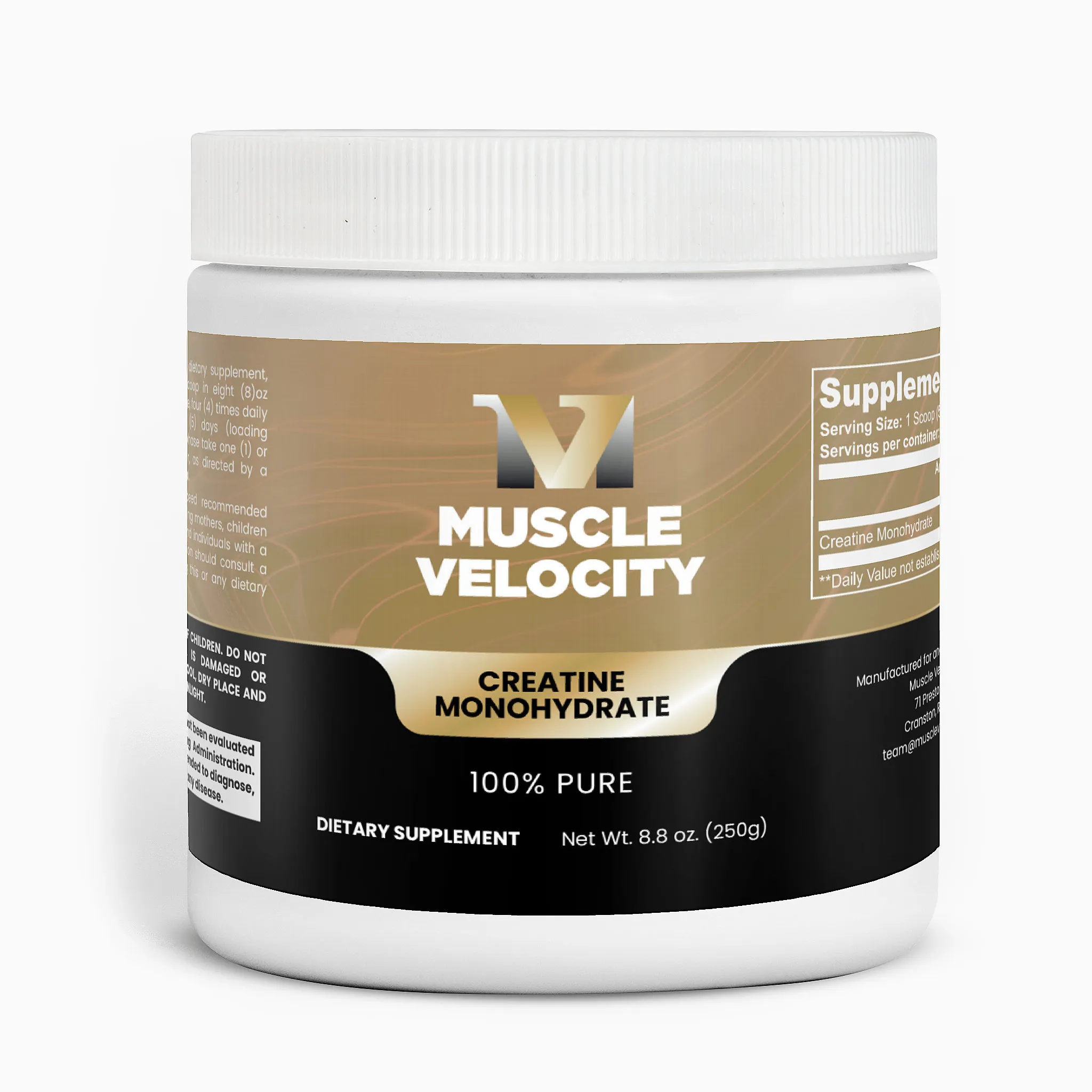
Muscle Velocity Creatine is unflavored micronized monohydrate, so it goes into the coffee, the shaker, or the bedside glass without adding a flavor to your routine.
Simplest protocol
Single-ingredient micronized monohydrate for a straightforward daily creatine routine.
View creatine monohydrateEducational content only. Supplements are not a substitute for medical care. Speak with a qualified healthcare professional when a condition, medication, or persistent symptom is involved.
Creatine does its work by raising the phosphocreatine stored inside muscle, which regenerates ATP during short, hard efforts. That store fills gradually. In the research protocols, a loading week fills it fast and a steady daily amount fills it over about four weeks. Either way, the level you train with on any given day reflects weeks of intake, not the dose you took an hour ago.
That is the whole timing argument in one sentence. Caffeine is a clock supplement: take it, wait, feel it. Creatine is a calendar supplement. The day-to-day question is whether you took it, not when.
One small 2013 trial gave recreational lifters creatine either right before or right after training for four weeks. The post-workout group showed a slight edge in lean mass and strength. The authors were careful to call the difference small, and the trial was not large enough to settle the question.
A 2021 review of the timing literature reached the honest conclusion: the evidence is limited and mixed, and taking creatine consistently matters more than taking it at a particular moment around training. If pairing it with the post-training shaker helps you remember, that is a good enough reason to do it.
Food helps a little. In a controlled study, taking creatine with carbohydrate, or with carbohydrate plus protein, increased how much creatine the body retained compared with taking it alone. A normal meal does this for free, which is one more argument for anchoring creatine to breakfast or dinner.
Rest days count. Muscle stores drain slowly, and daily intake, training or not, is the simplest way to keep them full.
Before bed is fine. Creatine is not a stimulant and has no mechanism that would keep you awake. No trial has tested bedtime specifically, so this is reasoning from what creatine is, not from a study of sleep. If the bedside glass is the slot you never miss, use it.
Pick one slot you already never skip and attach creatine to it. Mix it fully; micronized monohydrate suspends better than coarse powder, but any creatine left at the bottom of the glass is creatine you did not take. Then give the routine four weeks on a stable training plan before you judge it.
If your training time moves around, the slot should not move with it. Morning coffee at the same hour beats a shaker that happens whenever the gym happens.
Buying checklist
Breakfast, the post-training shaker, or the bedside glass. The slot you never skip beats the slot that is theoretically better.
Pairing creatine with carbohydrate and protein raised retention in a controlled study. Your regular meal already does that.
Stores fill over weeks. Judge the routine after a month on a stable training plan, not after a single session.
Fit check
Common questions
Either works. One small trial leaned slightly toward after training, and a 2021 review found the timing evidence limited and mixed. Pick the slot you will repeat every day; that matters more than the clock.
Yes. Creatine is not a stimulant and has no known mechanism that affects sleep. No trial has tested bedtime specifically, so this is reasoning from how creatine works rather than from a sleep study.
You can, but a meal with carbohydrate and protein increased creatine retention in a controlled study, and food tends to be easier on the stomach. Taking it with a meal is the simpler default.
Yes. Muscle creatine stores drain slowly, so daily intake is the simplest way to keep them full. Training-day-only use leaves gaps that the research protocols never had.
The idea comes from one small study in the 1990s. The ISSN position stand calls the evidence for a real conflict limited. Keep both if both help you train. If your stomach objects to the combination, separate them by a few hours.
Evidence desk
Deepen your understanding with these specific protocols.
Continue the creatine guide