
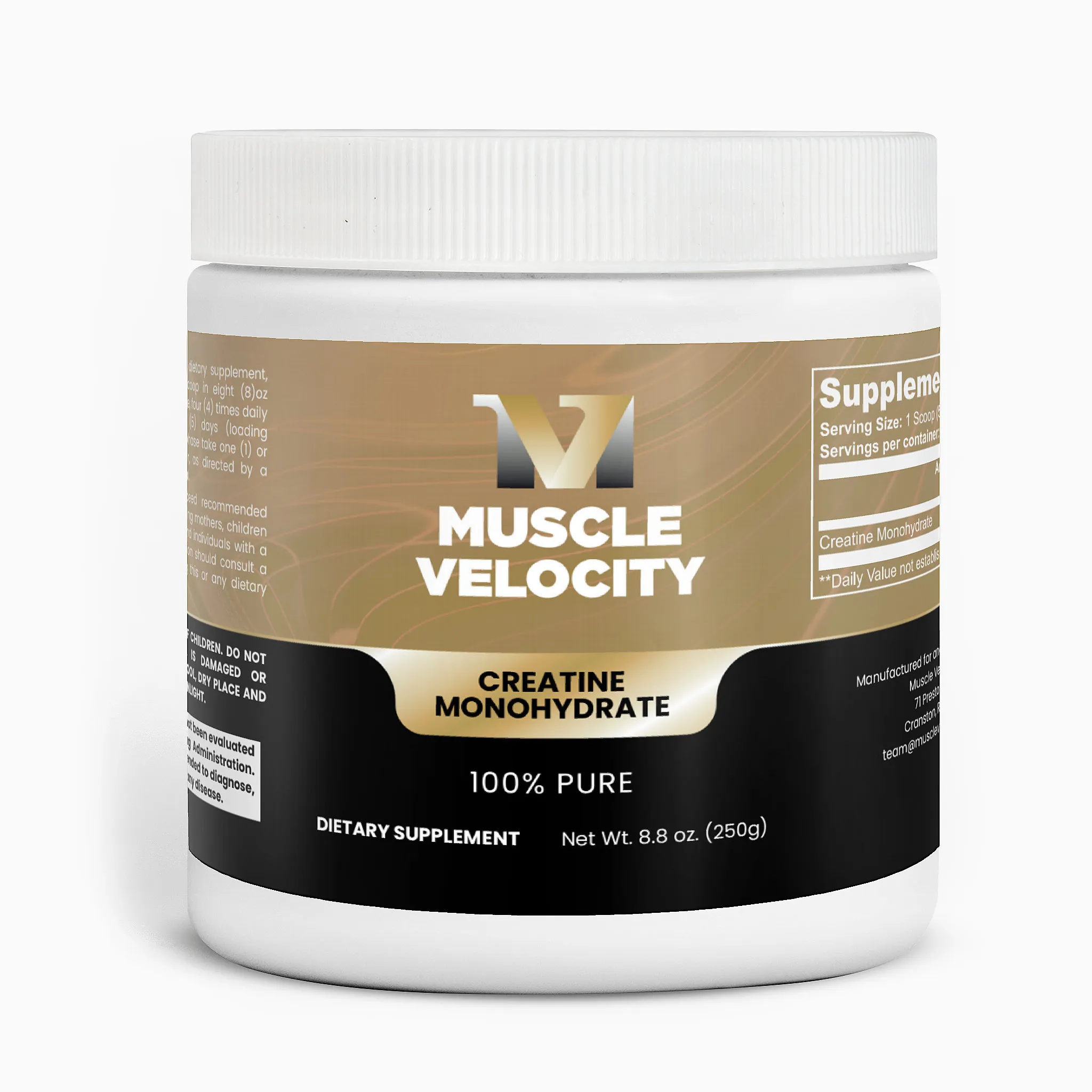
Simplest protocol
Creatine Monohydrate
Single-ingredient micronized monohydrate for a straightforward daily creatine routine.
View creatine monohydrateForm: micronized
Micronizing grinds the same creatine monohydrate into finer particles. That changes the glass, not the muscle. Here is the honest split.
This guide is part of our creatine use-case guides track. For continuity, read micronized creatine monohydrate and creatine hcl vs creatine monohydrate.
The short answer
Micronized creatine monohydrate is ordinary creatine monohydrate ground to a smaller particle size. It is the same molecule, so it does the same thing in the muscle. What changes is the glass: finer particles mix faster, settle slower, and leave less grit at the bottom. No trial has shown that micronized creatine raises muscle creatine or performance more than standard monohydrate. Think of it as a convenience and comfort upgrade, not a potency upgrade. Muscle Velocity Creatine is micronized, and this page is where we tell you exactly what that buys you.
Decision brief
Micronized means smaller particles of the same creatine monohydrate. The chemistry does not change.
Finer powder mixes faster, suspends longer, and leaves less sediment. That is the whole practical gain.
No human trial shows micronized creatine works better in the muscle than standard monohydrate.
If a label sells micronized as higher potency, the claim has no evidence behind it.
Muscle Velocity standard
Muscle Velocity Creatine is micronized creatine monohydrate: the reference form from the research, milled finer so it mixes clean.
Simplest protocol
Single-ingredient micronized monohydrate for a straightforward daily creatine routine.
View creatine monohydrateEducational content only. Supplements are not a substitute for medical care. Speak with a qualified healthcare professional when a condition, medication, or persistent symptom is involved.
Micronizing is a milling step. The manufacturer takes standard creatine monohydrate crystals and grinds them into much finer particles. Nothing is added and nothing is changed chemically. The powder in the tub is still creatine monohydrate, the form behind nearly every creatine study.
Brands like to quote a particle-size multiplier. We do not, because no trial ties a particle-size number to a result in the body. The honest claim is simpler: finer powder, same molecule.
Creatine monohydrate is only modestly soluble in water at room temperature, so what you drink is partly a suspension. Coarse crystals sink fast and collect as grit at the bottom of the glass. Finer particles stay suspended longer, mix with a few stirs instead of a minute of shaking, and leave less behind.
That matters more than it sounds. Creatine left at the bottom of the glass is creatine you did not take, and texture is one of the common reasons people quit a daily powder. If grit was your reason, micronized is the fix.
A 2011 review examined the alternative forms of creatine on the market, including variants that differ by particle size or by the salt they are bound to. It found no form with evidence of greater effectiveness than plain monohydrate. The ISSN position stand reaches the same place: monohydrate is the reference, and no other form has been shown to do more.
Micronized creatine is monohydrate, so it inherits that evidence base exactly. Not more, not less. Expect the same rise in muscle creatine, over the same number of weeks, at the same research-range serving.
Choose it if you mix creatine in water or coffee and dislike grit. Choose it if a coarse powder put you off before. Some men also report that finer powder sits easier on the stomach; that is a reasonable thing to test on yourself, not a trial result, so we will not promise it.
Do not choose it because a label says it is stronger. It is the same strength. The reason to want micronized is that you will actually keep taking it.
Buying checklist
Micronized should describe the grind of creatine monohydrate, not disguise a different form or a blend.
The label states the amount of creatine per serving in plain numbers. Finer powder does not change how much you need.
If you drink it in water or coffee, finer powder earns its place. If you only ever blend it into a thick shake, grind matters less.
Fit check
Common questions
Not in the muscle. It is the same molecule, and no trial shows a bigger effect. It is better in the glass: it mixes faster, stays suspended longer, and leaves less grit.
Not fully at room temperature; creatine monohydrate is only modestly soluble, so some stays suspended. Micronized powder stays suspended longer and settles less, which is the practical difference you notice.
Some men say so, and finer particles make that plausible, but no trial has tested it. If a coarse powder bothered you, micronized is a reasonable thing to try. Splitting the serving across the day is the other lever.
No. The grind changes how the powder behaves in water, not how much creatine is in a serving. Use the serving on the label, the same as for any monohydrate.
Evidence desk
Deepen your understanding with these specific protocols.
Continue the creatine guide