
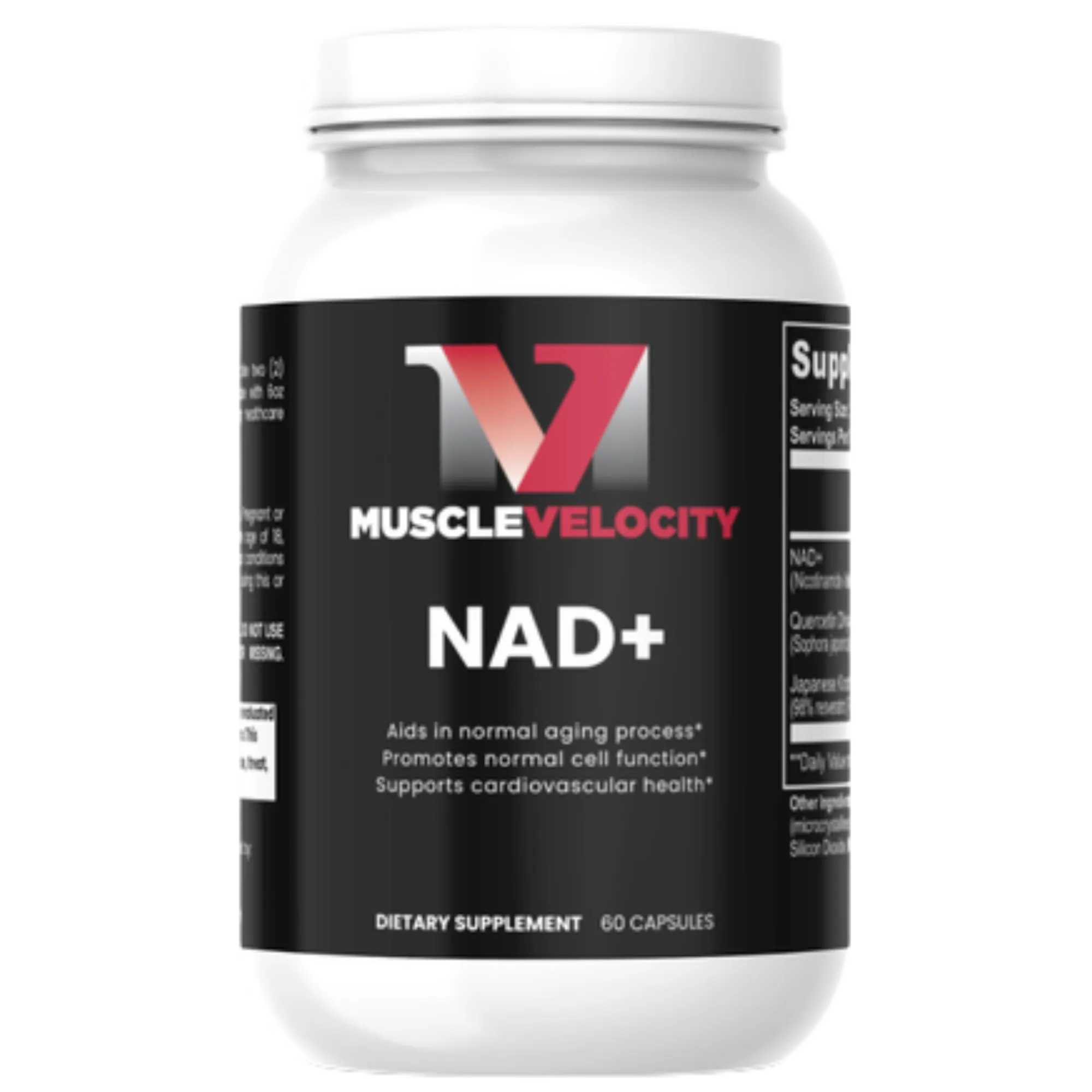
Daily cellular protocol
NAD+
500mg of NAD+ supported by Quercetin and Resveratrol, dosed once daily for cellular energy and metabolic health.
View NAD+The short, honest answer
This is a short page because the honest version is short. Male pattern hair loss is androgen-driven, and NAD+ does not address that mechanism.
This guide is part of our NAD+ supplement guides track. For continuity, read our NAD+ formula and NAD+ for weight loss.
The short answer
There is no randomized human trial evidence that NAD+ or its precursors treat or slow hair loss. Male pattern hair loss is primarily driven by androgen sensitivity at the follicle, particularly DHT — a different mechanism from cellular NAD+ availability. NAD+ does decline with age in human tissue, and that is sometimes used to build a hair story, but the connecting evidence in people does not exist. If hair loss is your concern, this is not the category, and a clinician is a better first stop.
Decision brief
No randomized human trial supports NAD+ or its precursors for hair loss.
Male pattern hair loss is androgen-driven, principally through DHT at the follicle.
The age-related NAD+ decline is real but does not connect to a demonstrated hair outcome.
Treatments with actual evidence exist, and a clinician is the right route to them.
Muscle Velocity standard
500mg of NAD+ with Quercetin and Resveratrol. We are not going to attach a hair claim to it, because there is no trial behind one.
Daily cellular protocol
500mg of NAD+ supported by Quercetin and Resveratrol, dosed once daily for cellular energy and metabolic health.
View NAD+Educational content only. Supplements are not a substitute for medical care. Speak with a qualified healthcare professional when a condition, medication, or persistent symptom is involved.
The argument runs: hair follicles are metabolically active, NAD+ powers cellular energy, NAD+ falls with age, therefore raising it should support hair. Every individual link sounds reasonable, which is exactly why the chain is persuasive.
The decline itself is well documented. Massudi and colleagues measured NAD+ in human skin across donors aged 0 to 77 and found a strong negative correlation with age. Skin is where follicles live, so the connection feels intuitive.
But an intuitive chain is not a finding. The step that would matter — supplementing NAD+ and measuring a hair outcome in a randomized human trial — has not been taken.
Androgenetic hair loss is principally a matter of follicle sensitivity to androgens, particularly dihydrotestosterone. Susceptible follicles progressively miniaturise in response to DHT exposure over time. That is a hormonal and genetic mechanism.
NAD+ availability is not that mechanism. Supporting cellular energy metabolism does not address androgen sensitivity at the follicle, and no trial has shown it modifies the process.
This matters because time is the variable that counts most in hair loss. Months spent on an intervention with no evidence are months not spent on one with evidence.
See a clinician. Hair loss has several possible causes beyond the androgenetic pattern — thyroid dysfunction, iron deficiency, medication effects, and others — and several of them are identifiable with bloodwork and addressable.
Treatments with genuine evidence exist for androgenetic hair loss, and they are worth discussing with someone qualified to prescribe and monitor them. That conversation is out of scope for a supplement guide, deliberately.
If you want to take NAD+ for cellular energy support with realistic expectations, nothing here argues against that. Just do not buy it expecting a hair outcome, and do not let it delay a proper evaluation.
Buying checklist
There is no randomized human evidence for one. A product making the claim is not reading its own field.
Several causes of hair loss are identifiable with bloodwork and treatable. A supplement trial delays that.
A brand explaining that follicles are metabolically active is not the same as one showing a hair result.
Cellular energy support is defensible. Hair is not. Do not let a good product carry a bad promise.
Fit check
Common questions
There is no randomized human trial evidence that NAD+ or its precursors treat or slow hair loss. The mechanistic story sounds plausible, but the step of actually measuring a hair outcome in a human trial has not been taken.
No human trial supports that. Male pattern hair loss is driven by follicle sensitivity to androgens, particularly DHT, which is a different mechanism from cellular NAD+ availability.
Because hair follicles are metabolically active and NAD+ declines with age, which makes for a persuasive-sounding chain. Persuasive is not the same as demonstrated. Ask which randomized human trial measured a hair outcome; there is not one.
See a clinician. Several causes beyond androgenetic pattern loss — thyroid issues, iron deficiency, medication effects — are identifiable with bloodwork. Treatments with real evidence exist for androgenetic loss and are worth discussing with someone qualified to prescribe them.
Evidence desk
Continue the NAD+ guide
What the trials support for a specific outcome — and what they do not.