
Daily cellular protocol
NAD+
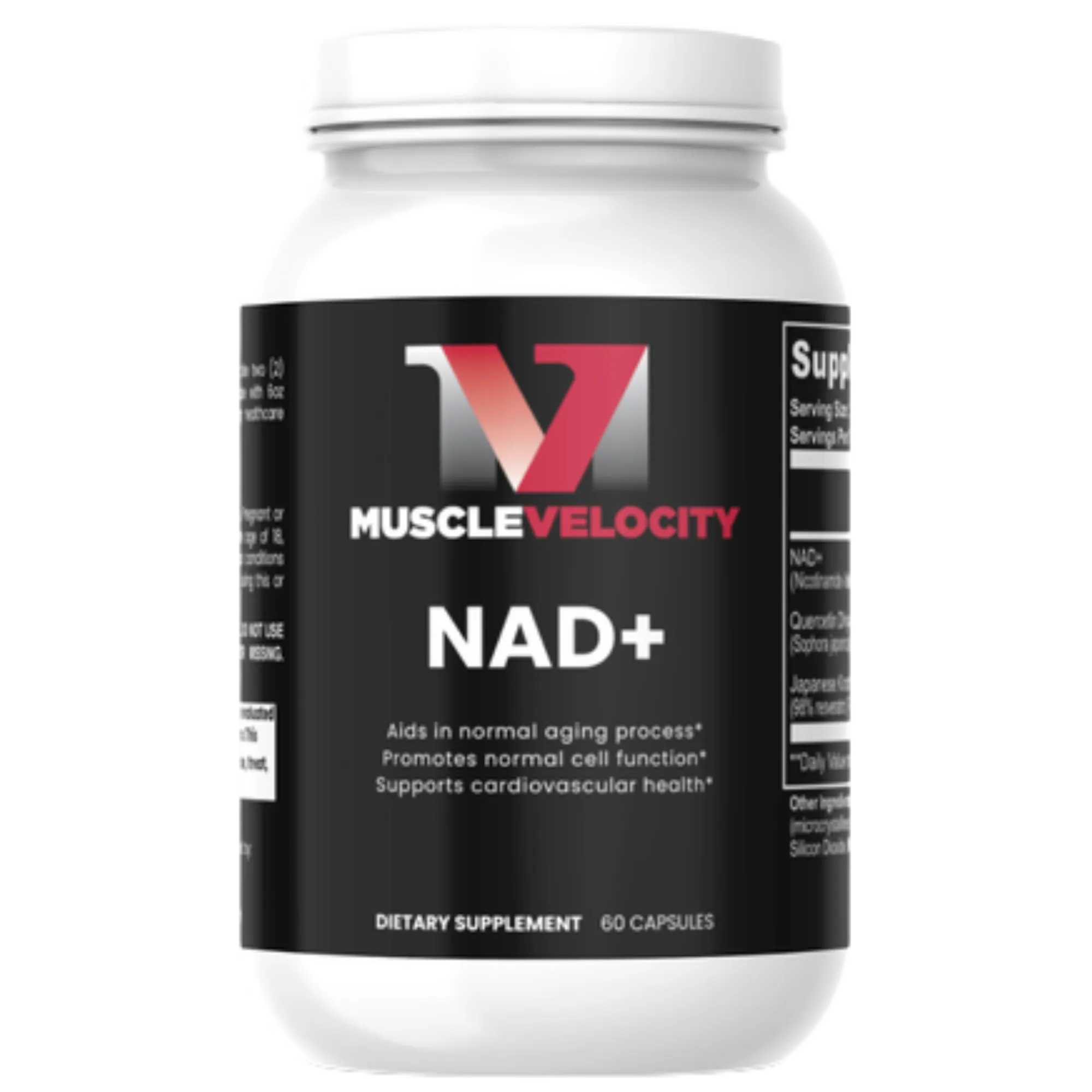
500mg of NAD+ supported by Quercetin and Resveratrol, dosed once daily for cellular energy and metabolic health.
View NAD+Metabolism, measured
NAD+ sits in the middle of energy metabolism. That is why it gets sold for fat loss — and why the trial results are so awkward for that pitch.
This guide is part of our NAD+ supplement guides track. For continuity, read our NAD+ metabolic formula and NAD+ for skin.
The short answer
The randomized evidence does not support NAD+ or NMN as a weight-loss intervention. A 2024 meta-analysis of eight trials in 342 adults found blood NAD+ rose in five of them while fasting glucose, insulin, HbA1c, lipid profile, BMI, and blood pressure showed no significant differences from placebo. A separate review of 12 studies covering 513 participants reached the same conclusion and stated plainly that an exaggeration of NMN's benefits may exist in the field. Treat metabolic-health claims here with real caution.
Decision brief
Multiple 2024 meta-analyses found no significant effect on glucose, insulin, HbA1c, or lipids.
BMI and body weight specifically showed no significant difference from placebo.
Blood NAD+ still rose in most of those same trials — the biomarker moved, the outcomes did not.
One review explicitly warned that benefits in this field may be exaggerated.
Muscle Velocity standard
500mg of NAD+ with Quercetin and Resveratrol for cellular energy support. We are not going to tell you it burns fat, because the trials say it does not.
Daily cellular protocol
500mg of NAD+ supported by Quercetin and Resveratrol, dosed once daily for cellular energy and metabolic health.
View NAD+Educational content only. Supplements are not a substitute for medical care. Speak with a qualified healthcare professional when a condition, medication, or persistent symptom is involved.
NAD+ is a cofactor in the reactions that convert fuel into usable energy, and it feeds sirtuins involved in metabolic regulation. Rodent work has shown metabolic effects from raising NAD+. Assemble that and you have a plausible-sounding story about boosting metabolism.
Plausible-sounding is where it stops. The step from a metabolic cofactor to measurable fat loss in humans is exactly the step that has to be demonstrated in trials, and it is the step that has repeatedly failed to show up.
This is a category where the mechanism is genuinely interesting and the outcome data is genuinely disappointing. Both halves belong in an honest answer.
A 2024 meta-analysis published in Current Diabetes Reports pooled eight randomized controlled trials covering 342 mainly non-diabetic middle-aged and older adults, at 250–2000mg/day for 14 days to 12 weeks. Blood NAD+ increased in five of the eight trials. HOMA-IR showed a marginal 0.27 reduction at p = 0.06, which became nonsignificant once a methodologically questionable trial was excluded.
Everything else was null: fasting glucose, fasting insulin, HbA1c, total cholesterol, LDL, HDL, triglycerides, BMI, blood pressure, and liver enzymes. Five of the eight studies were rated low risk of bias, three had some concerns — so this is not a case of weak trials hiding a real effect.
A separate 2024 systematic review covering 12 studies and 513 participants reported the same pattern and concluded that an exaggeration of the benefits of NMN supplementation may exist in the field. That is a review team saying the marketing has outrun the data.
If weight loss is the objective, this is not the category to spend money on. The intervention with the evidence is an energy deficit you can sustain, supported by adequate protein, resistance training, and sleep. None of that is novel, and all of it is better supported than anything in this aisle.
There is a defensible reason to take NAD+ precursors — supporting cellular energy metabolism as a foundational input, with realistic expectations about what that changes. Fat loss is not on that list.
If you have a diagnosed metabolic condition, this is a conversation with a clinician. A supplement whose glucose and lipid outcomes were null across pooled randomized trials should not be part of managing one.
Buying checklist
Any product promising fat loss or metabolic transformation is contradicted by pooled randomized data. That is a disqualifying signal.
Cellular energy support is defensible. Weight loss is not. Buy for the first or do not buy.
For body composition, the money is better spent on food quality, training, and sleep than on this category.
Null glucose and lipid results mean this is not a tool for managing diagnosed metabolic disease.
Fit check
Common questions
The randomized evidence says no. A 2024 meta-analysis of eight trials in 342 adults found no significant differences from placebo in BMI, fasting glucose, insulin, HbA1c, lipids, or blood pressure, even though blood NAD+ rose in most of those trials.
It raises NAD+, which is a metabolic cofactor. But pooled trials found no significant change in the metabolic outcomes that would follow if that translated into a meaningful effect. One 2024 review of 12 studies concluded that an exaggeration of NMN's benefits may exist in the field.
A 2024 meta-analysis found a marginal HOMA-IR reduction of 0.27 at p = 0.06, which lost significance when one trial with methodological concerns was excluded. That is a signal too weak to act on, and fasting glucose and HbA1c showed no significant change.
Supporting cellular energy metabolism as a foundational input is defensible, with realistic expectations. Raising NAD+ is well established. Weight loss and metabolic improvement specifically are not supported by the pooled randomized evidence.
Evidence desk
Continue the NAD+ guide
What the trials support for a specific outcome — and what they do not.