
Daily cellular protocol
NAD+
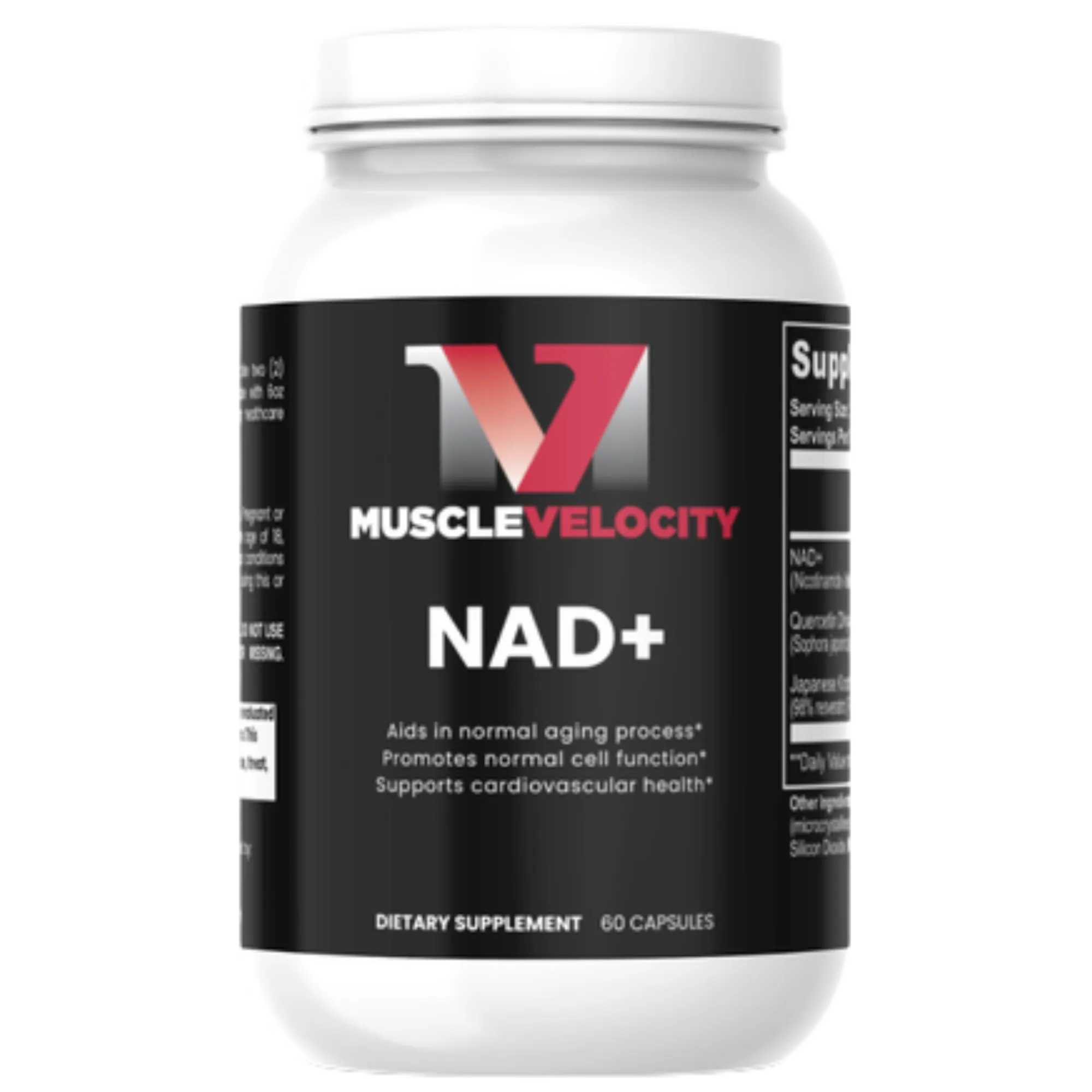
500mg of NAD+ supported by Quercetin and Resveratrol, dosed once daily for cellular energy and metabolic health.
View NAD+Needle or capsule
The needle looks more serious. Whether it produces a more serious result is a question the human evidence has not yet answered.
This guide is part of our NAD+ supplement guides track. For continuity, read our oral NAD+ protocol and nicotinamide riboside vs NMN.
The short answer
Injected and infused NAD+ bypass digestion, which is a genuine pharmacokinetic difference. What has not been shown is that this produces better outcomes than oral precursors, because the head-to-head human trials measuring intracellular NAD+ have not been done. A 2026 retrospective clinic review found all six IV NAD+ clients experienced moderate to severe symptoms during infusion, averaging 97 minutes per session. Oral precursors carry the stronger randomized record and a fraction of the cost and friction.
Decision brief
Injection and infusion genuinely bypass digestion — that part is not in dispute.
No head-to-head human trial establishes that they beat oral precursors on outcomes.
Documented IV NAD+ sessions were slow and commonly uncomfortable.
The oral route has the randomized placebo-controlled evidence and none of the appointment overhead.
Muscle Velocity standard
500mg of NAD+ with Quercetin and Resveratrol, daily. No cannula, no 97-minute session, and a dose you can sustain for a real trial.
Daily cellular protocol
500mg of NAD+ supported by Quercetin and Resveratrol, dosed once daily for cellular energy and metabolic health.
View NAD+Educational content only. Supplements are not a substitute for medical care. Speak with a qualified healthcare professional when a condition, medication, or persistent symptom is involved.
Swallowed compounds pass through digestion and first-pass liver metabolism. Injected or infused compounds do not. That is a real difference in how much of a dose reaches circulation, and it is the entire basis of the marketing.
But reaching circulation is not the endpoint that matters. NAD+ is a large, charged molecule, and how efficiently circulating NAD+ crosses into cells is precisely the question that remains unresolved in humans.
So the delivery advantage is established at one step of the chain and unestablished at the step that determines whether you feel anything. Marketing tends to present the first as though it settles the second.
A 2026 retrospective review in Frontiers in Aging examined fourteen clients at a commercial wellness clinic: six receiving 500mg of IV NAD+ and eight receiving 500mg of IV nicotinamide riboside, each across four consecutive days.
Every one of the six IV NAD+ clients reported moderate to severe symptoms during infusion — abdominal cramping, diarrhoea, nausea, vomiting, elevated heart rate, throat pain, chest pressure. Symptoms stopped when the infusion did. Sessions averaged 97 minutes because clients slowed their own drip rate to cope. The IV NR group averaged 37 minutes with milder effects.
The authors found no clinically significant changes in liver enzymes or inflammatory markers during or 30 days after infusion, and stated the limitations plainly: retrospective, fourteen people, no placebo arm.
An injection or infusion protocol means appointments, needles, and repeated sessions, against a capsule taken with breakfast. That difference compounds over the eight to twelve weeks the oral trials actually ran.
The cost gap is large enough that it deserves its own arithmetic. Compare a full course on both sides rather than one session against one bottle, and remember you are paying the premium for a route whose comparative advantage has not been demonstrated.
The reasonable sequence is to establish whether a verified oral dose does anything for you first. If eight to twelve consistent weeks produce nothing, escalating to a far more expensive route targeting the same pathway is not an obviously better bet.
Buying checklist
For your goal, specifically. Mechanistic diagrams and before-and-after photos are not trial data.
One infusion against one bottle is not a comparison. Price out eight to twelve weeks on both sides.
A provider who does not mention cramping, nausea, and long infusion times is not describing the documented experience.
It is cheaper, better evidenced, and tells you whether the pathway does anything for you at all.
Fit check
Common questions
Not on current evidence. Injection bypasses digestion, but no head-to-head human trial measuring intracellular NAD+ has shown it produces better outcomes than oral precursors. The randomized placebo-controlled record sits with the oral route.
In a 2026 retrospective clinic review, IV NAD+ sessions averaged 97 minutes, largely because clients reduced their own drip rate to tolerate symptoms. The IV nicotinamide riboside comparison group averaged 37 minutes.
In that same review, all six IV NAD+ clients reported moderate to severe symptoms during infusion including cramping, nausea, vomiting, elevated heart rate, and chest pressure, all resolving when the infusion ended. No clinically significant liver enzyme or inflammatory marker changes were found during or 30 days after.
Both target the same pathway, and the oral route has the stronger randomized evidence. If you are currently under a clinician's care for an injectable protocol, that change is a conversation to have with them rather than a unilateral swap.
Evidence desk
Continue the NAD+ guide
Precursor against precursor, and capsule against clinic.