
Daily cellular protocol
NAD+
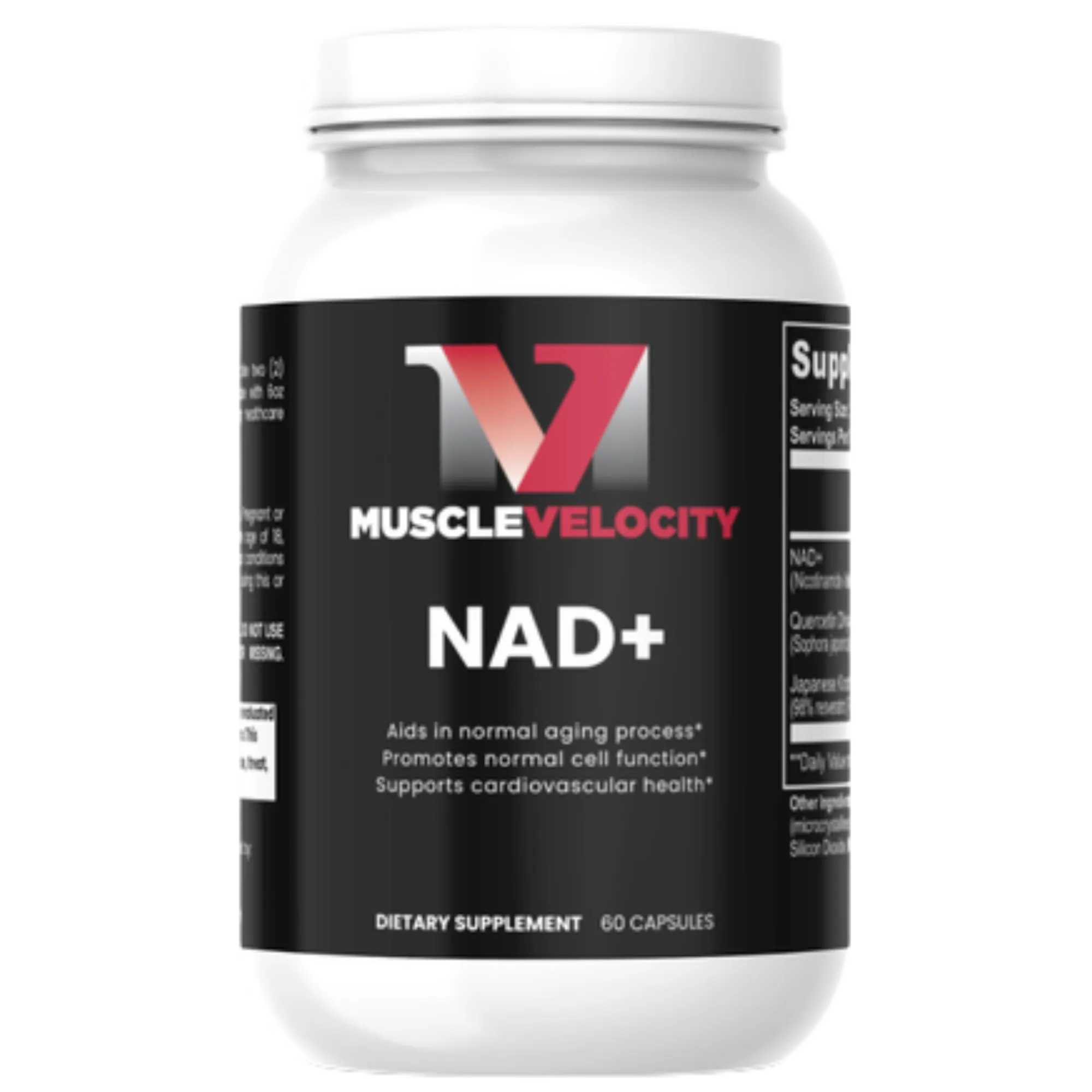
500mg of NAD+ supported by Quercetin and Resveratrol, dosed once daily for cellular energy and metabolic health.
View NAD+Precursor or the molecule itself
One is a building block. The other is the finished molecule. The difference matters less at the checkout than the marketing implies.
This guide is part of our NAD+ supplement guides track. For continuity, read direct NAD+ supplementation and NAC vs NAD+ supplements.
The short answer
NMN is a precursor your body converts into NAD+. Products labelled NAD+ contain the molecule itself. The catch is that NAD+ is a large, charged molecule that does not survive digestion intact — it is broken down and largely reassembled from precursors anyway. That is why the randomized human trials in this field study precursors. Both routes end at the same place. Judge products on stated dose, verified content, and price per gram rather than on which name is on the front.
Decision brief
NMN is converted into NAD+ through the salvage pathway; the destination is identical.
NAD+ taken orally is largely broken down and rebuilt rather than absorbed whole.
The randomized human trials in this field studied precursors, not intact oral NAD+.
No human trial establishes that one label is clinically better than the other.
Muscle Velocity standard
500mg of NAD+ with Quercetin and Resveratrol, with the amount stated where it counts — on the supplement facts panel.
Daily cellular protocol
500mg of NAD+ supported by Quercetin and Resveratrol, dosed once daily for cellular energy and metabolic health.
View NAD+Educational content only. Supplements are not a substitute for medical care. Speak with a qualified healthcare professional when a condition, medication, or persistent symptom is involved.
NAD+ is a large molecule carrying charge, which makes it poorly suited to crossing the gut wall intact. What largely happens instead is that it is degraded into smaller fragments, which are then used to rebuild NAD+ inside your cells through the salvage pathway.
NMN skips a step of that process by arriving as a precursor already. Nicotinamide riboside arrives one step earlier still. Whichever you take, the cell is doing the assembly.
This is why the framing of direct versus indirect is misleading. There is no practical oral route that delivers intact NAD+ to your cells, so the meaningful comparison is between precursors reaching the same pathway.
The evidence base is built on precursors. Martens and colleagues used nicotinamide riboside at 1000mg/day and measured roughly a 60% rise in NAD+ in peripheral blood mononuclear cells. The 2024 systematic review of physical-performance trials pooled ten randomized NMN studies covering 437 participants.
A separate 2024 meta-analysis of eight NMN trials in 342 adults found blood NAD+ rose in five of them, while fasting glucose, insulin, HbA1c, lipid profile, BMI, and blood pressure showed no significant differences from placebo.
What you will not find is a comparable body of randomized trials showing that oral intact NAD+ outperforms these. That absence is the actual answer to the question.
Whichever term is on the front, look at the supplement facts panel for the compound and the milligram amount. Some products labelled NAD+ list a precursor in the panel, which tells you the marketing and the formulation are answering different questions.
Then verify content. Sandalova and colleagues assayed 18 commercial NMN products for GeroScience and found only seven within 10% of label claim, with three containing no detectable NMN. That risk applies regardless of which name is on the bottle.
Then compare price per gram of the actual active compound. That number, more than the precursor debate, is what separates products in this category.
Buying checklist
The supplement facts panel names the actual compound and amount. Front-of-bottle terminology is marketing.
Published precursor trials sit between 150mg and 2000mg per day depending on outcome studied.
Label inaccuracy has been documented across this category. A certificate matched to your lot is the only real check.
Once dose and verification are equal, this is the difference that actually affects you.
Fit check
Common questions
Neither has demonstrated superiority in human trials. NAD+ taken orally is largely broken down and rebuilt from precursors anyway, which is why the randomized evidence base studies precursors like NMN and nicotinamide riboside. Choose on verified dose and price per gram.
NAD+ is a large, charged molecule poorly suited to crossing the gut wall intact. It is largely degraded and the fragments are used to rebuild NAD+ inside cells through the salvage pathway. That is the same route a precursor supplement uses.
Because NAD+ is the term buyers search for. Check the supplement facts panel: it names the compound actually included and its amount. If the panel lists a precursor, the product is a precursor supplement regardless of the front label.
Published trials dose by the specific compound used, ranging from 150mg to 2000mg per day depending on the precursor and outcome studied. Match your dose to the compound named in the panel rather than to a general NAD+ recommendation.
Evidence desk
Continue the NAD+ guide
Precursor against precursor, and capsule against clinic.