
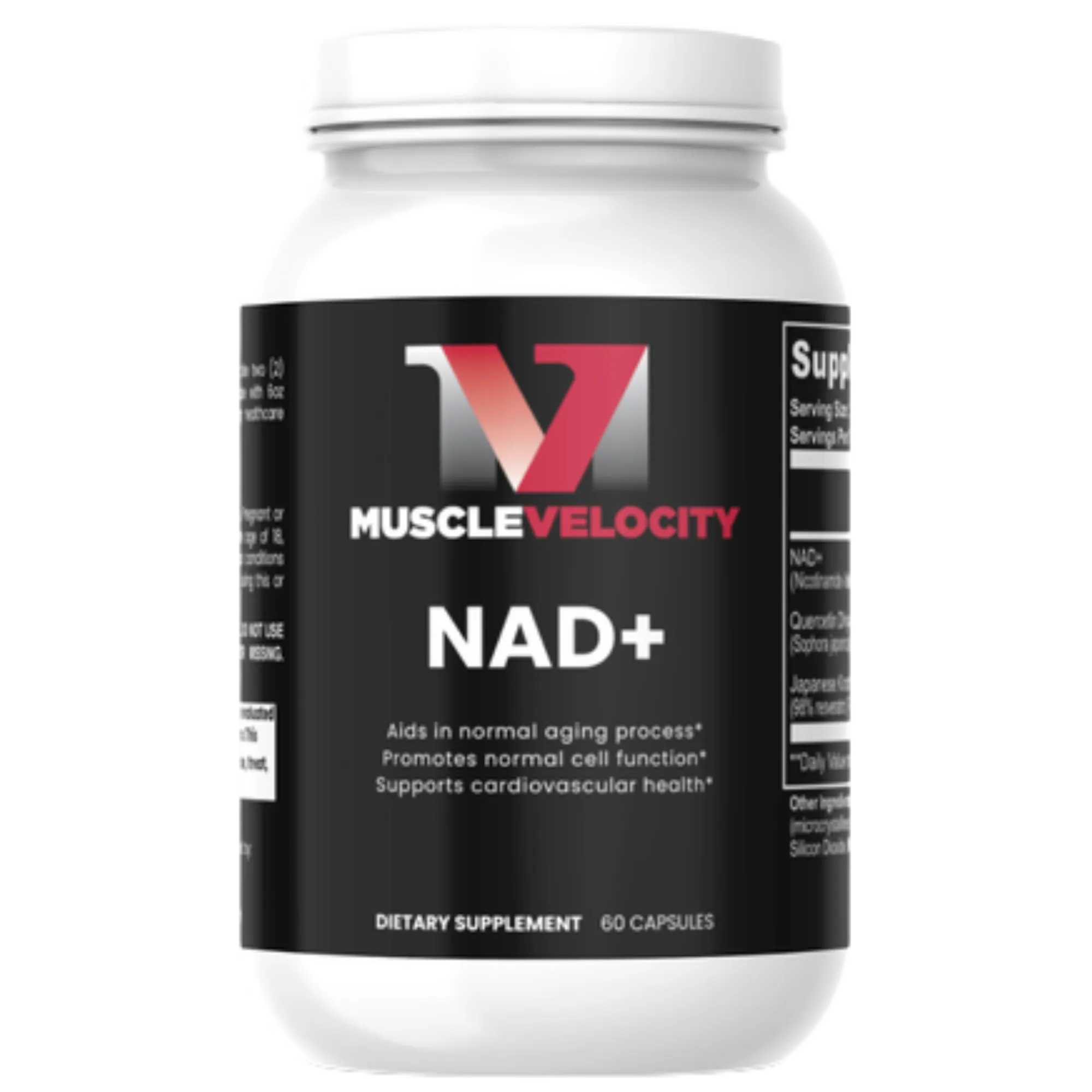
Daily cellular protocol
NAD+
500mg of NAD+ supported by Quercetin and Resveratrol, dosed once daily for cellular energy and metabolic health.
View NAD+Three letters apart
These two get compared because they look alike in a search box. Biologically they are not alternatives to one another at all.
This guide is part of our NAD+ supplement guides track. For continuity, read our NAD+ formula and NAD+ supplements vs injections.
The short answer
NAC is N-acetylcysteine, an amino acid derivative that supplies cysteine for glutathione synthesis — your body's principal antioxidant system. NAD+ is a coenzyme central to energy metabolism and to sirtuin and PARP signalling. They operate in different pathways toward different ends. Choosing between them only makes sense once you know which job you are trying to do, and for most goals they are not substitutes. Nothing here is a reason to take either for a diagnosed condition without medical input.
Decision brief
NAC feeds glutathione synthesis. NAD+ is a metabolic and signalling coenzyme.
They are not interchangeable and are not competing for the same role.
The similar abbreviations, not similar biology, are why they get compared.
Neither is a treatment. Framing either as one is where supplement marketing usually goes wrong.
Muscle Velocity standard
500mg of NAD+ with Quercetin and Resveratrol. One variable, one stated dose, so you can actually tell whether it does anything.
Daily cellular protocol
500mg of NAD+ supported by Quercetin and Resveratrol, dosed once daily for cellular energy and metabolic health.
View NAD+Educational content only. Supplements are not a substitute for medical care. Speak with a qualified healthcare professional when a condition, medication, or persistent symptom is involved.
N-acetylcysteine is a more stable delivery form of the amino acid cysteine. Cysteine is the rate-limiting ingredient in making glutathione, which is the body's main intracellular antioxidant. That is NAC's principal rationale as a supplement: keeping glutathione synthesis supplied.
NAD+ is a coenzyme. It shuttles electrons in the reactions that turn fuel into ATP, and it is consumed as a cofactor by sirtuins and PARPs during metabolic signalling and DNA repair. It is not an antioxidant in the sense NAC's pathway is.
So the comparison people are usually reaching for — which one should I take — is malformed. They address different systems. The useful question is which system you have a reason to support.
For NAD+, the randomized human record is reasonably clear on the biomarker and much softer on outcomes. Martens and colleagues showed roughly a 60% rise in NAD+ within immune cells at 1000mg/day of nicotinamide riboside in a double-blind placebo-controlled crossover.
Outcomes are where it thins. A 2024 meta-analysis of eight NMN trials in 342 adults found NAD+ rose in five of them while glucose, insulin, HbA1c, lipids, BMI, and blood pressure did not move significantly. Gindri and colleagues reviewed NAD and its precursors across ten studies and 489 participants in varied clinical populations and found them well tolerated.
That is a fair summary of the NAD+ case: a real, measurable biochemical effect, and outcome claims that should be made carefully or not at all.
Because they act in different pathways, there is no mechanistic conflict in taking both. There is also no human trial demonstrating that the combination produces a benefit that either alone does not.
The more useful discipline is to avoid stacking supplements you have no specific reason for. Two products at full price, taken together, make it impossible to attribute any change to either. If you want to know whether something works for you, run one variable at a time.
If you are considering NAC for a specific clinical reason, that is a conversation with a clinician rather than a supplement comparison article — it interacts with medical contexts in ways a general guide should not try to cover.
Buying checklist
Antioxidant capacity and cellular energy metabolism are different goals. Pick the molecule that matches yours.
Starting both at once makes any result uninterpretable. Sequence them if you want to learn anything.
The same label discipline applies to both categories: named compound, milligram amount, verifiable content.
NAC in particular has clinical contexts and interactions that make professional guidance appropriate.
Fit check
Common questions
NAC is N-acetylcysteine, which supplies cysteine for glutathione synthesis — the body's main antioxidant system. NAD+ is a coenzyme central to converting fuel into ATP and to sirtuin and PARP signalling. Different pathways, different purposes, similar-looking abbreviations.
That depends entirely on what you are trying to support, because they are not substitutes. If your interest is cellular energy metabolism, NAD+ precursors are the relevant category. If it is glutathione and antioxidant capacity, NAC is. Neither is a treatment for a diagnosed condition.
They act in different pathways, so there is no mechanistic conflict. There is also no human trial showing the combination outperforms either alone. Starting both at once also makes it impossible to attribute any change to one, so sequencing is more informative.
No. NAD+ precursors are nicotinamide riboside, NMN, and nicotinamide, which feed the salvage pathway. NAC feeds glutathione synthesis through cysteine. The names are close; the biochemistry is not.
Evidence desk
Continue the NAD+ guide
Precursor against precursor, and capsule against clinic.