
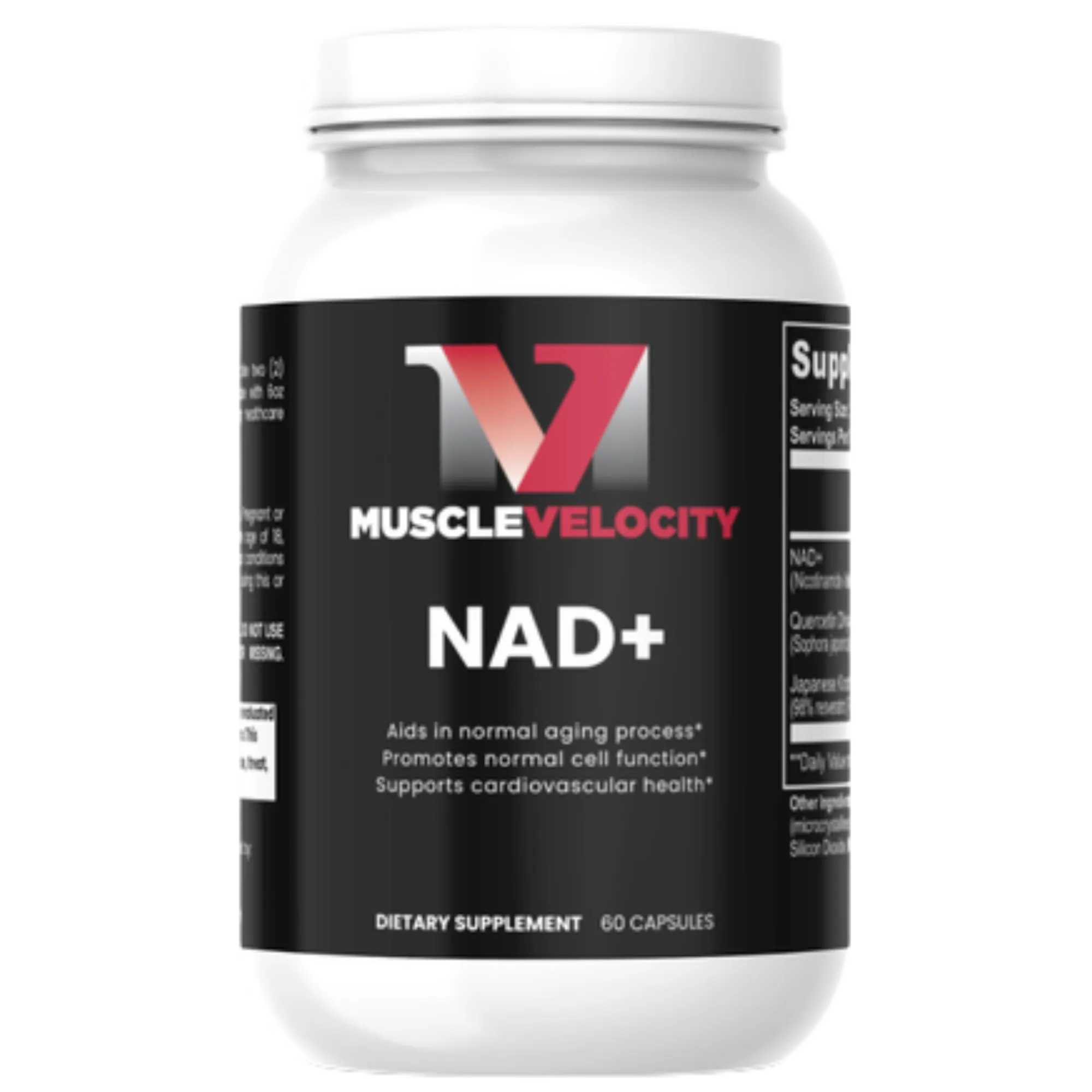
Daily cellular protocol
NAD+
500mg of NAD+ supported by Quercetin and Resveratrol, dosed once daily for cellular energy and metabolic health.
View NAD+Format, not magic
Format affects convenience, dose accuracy, and shelf life. What it has not been shown to affect is whether the supplement works.
This guide is part of our NAD+ supplement guides track. For continuity, read the NAD+ capsule alternative and NMN capsules.
The short answer
The randomized human trials behind NAD+ precursors used oral dosing in conventional forms, not liquids. There is no trial evidence that a liquid format produces better results than capsules. What does differ is practical: liquids allow flexible dosing but introduce measurement error and shorter stability, while capsules deliver a fixed, stable dose with no measuring. Choose on how reliably you will take it every day, not on an absorption claim.
Decision brief
No randomized human trial shows liquid NAD+ outperforming capsules.
Liquids allow dose flexibility but depend on you measuring accurately every time.
Capsules deliver a fixed dose and generally hold stability better over a months-long protocol.
Adherence beats format. The best version is whichever one you actually take daily.
Muscle Velocity standard
500mg of NAD+ with Quercetin and Resveratrol, in a capsule. Same amount every morning, which is what makes an eight-week trial readable.
Daily cellular protocol
500mg of NAD+ supported by Quercetin and Resveratrol, dosed once daily for cellular energy and metabolic health.
View NAD+Educational content only. Supplements are not a substitute for medical care. Speak with a qualified healthcare professional when a condition, medication, or persistent symptom is involved.
The Martens crossover study dosed 500mg of nicotinamide riboside twice daily as an oral supplement. The NMN trials pooled in the 2024 systematic review used oral dosing between 150mg and 1200mg per day. None of the core evidence base was built on liquid formulations.
That does not mean liquids do not work. It means the claim that they work better has no trial standing behind it, and you should treat format marketing accordingly.
The honest framing is that format is a delivery and adherence decision, not an efficacy decision. Anyone selling it as the latter is going beyond what has been tested.
Liquids let you adjust dose finely, which is useful if you want to start low or titrate. The cost is that every dose depends on you measuring correctly, and a dropper used quickly in the morning is not a precision instrument.
Capsules remove that variable entirely. You get the same amount every time, which matters when you are running an eight-to-twelve-week trial and trying to draw a conclusion from it. A consistent dose is what makes the result interpretable.
Stability is the other real difference. Dry capsules are generally more forgiving over a long protocol than liquid formats, which carry more storage and shelf-life considerations. For something you intend to take daily for months, that is not a trivial point.
Whatever format you choose, the content question does not go away. Sandalova and colleagues assayed 18 commercial NMN products for GeroScience and found measured content ranging from nothing detectable to slightly above claim, with only seven within 10% of label.
For a liquid, ask additionally how the stated concentration maps to a serving, and what the storage and expiry guidance is. A product that is accurate on the day it ships and degrades over the following weeks is not delivering the dose on the label by the time you finish the bottle.
Then hold the dose steady. Format flexibility becomes a liability if it turns into a different amount every morning.
Buying checklist
Whether by capsule count or a marked dropper, you need the same amount daily for the result to mean anything.
Liquids carry stability considerations that dry capsules largely avoid. Check before committing to a months-long protocol.
Independent assays found wide variance from label across commercial products. Format does not exempt anything from verification.
If a liquid is marketed as better absorbed, ask which human comparison demonstrates it. There generally is not one.
Fit check
Common questions
No randomized human trial shows liquid outperforming capsules. The core evidence base, including the Martens crossover and the NMN trials pooled in 2024 reviews, used conventional oral dosing. Format is an adherence and dose-accuracy decision, not an efficacy one.
The same criteria apply as to any format: a stated dose inside the studied 150–1200mg/day range, lot-specific third-party testing, and clear storage guidance. There is no evidence supporting a format-based ranking, so judge liquids on those checks rather than on absorption marketing.
Liquid formats generally carry more stability and storage considerations than dry capsules. That matters over a months-long protocol, because a product accurate at shipping may not deliver the label dose by the end of the bottle. Check the manufacturer's expiry and storage instructions.
That reintroduces the measurement problem capsules exist to solve, and may affect stability once the powder is exposed. If you need dose flexibility, a product designed for it is a better choice than improvising with a capsule.
Evidence desk
Continue the NAD+ guide
What is actually in the bottle, and whether the delivery claims hold up.