
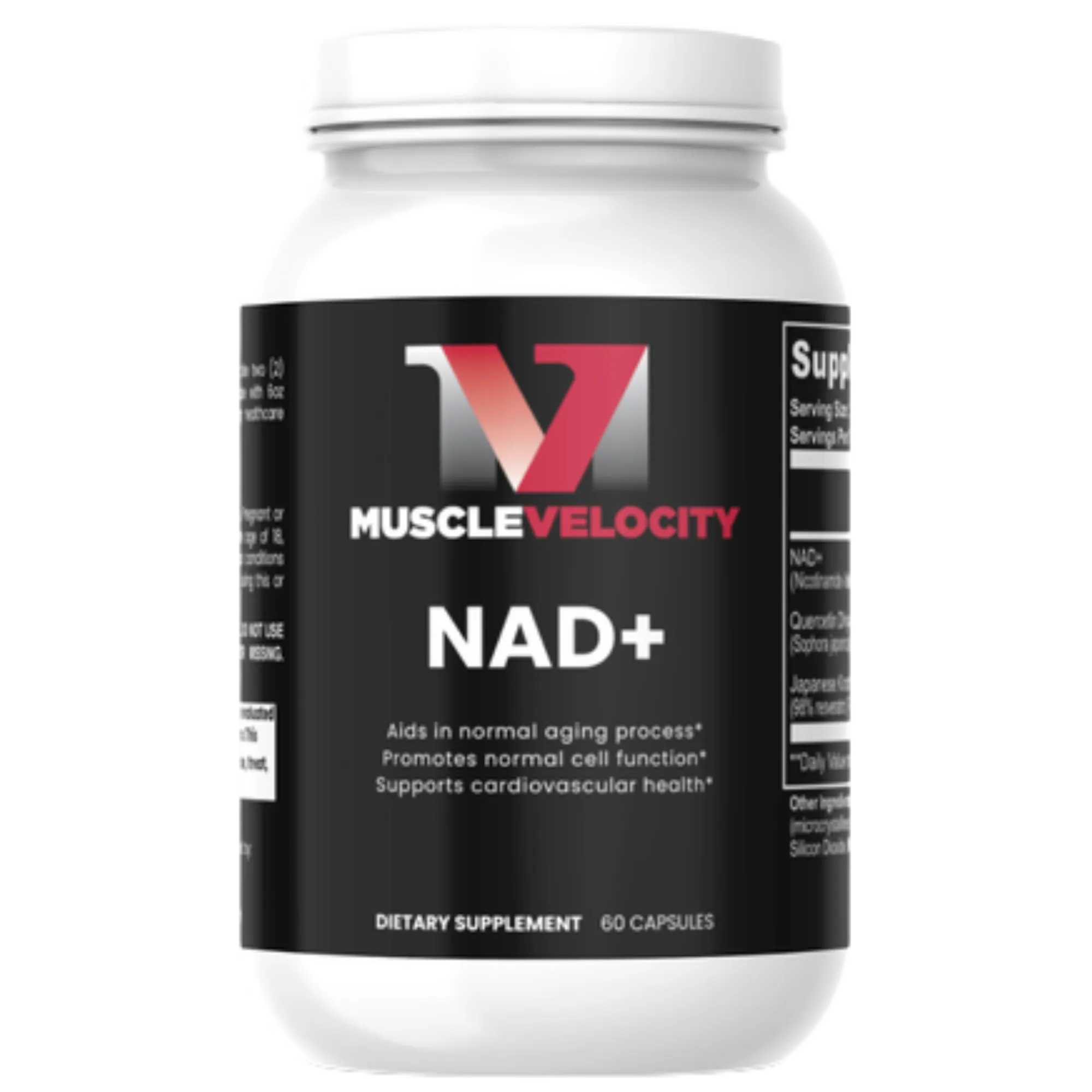
Daily cellular protocol
NAD+
500mg of NAD+ supported by Quercetin and Resveratrol, dosed once daily for cellular energy and metabolic health.
View NAD+Delivery claims, tested
Liposomal encapsulation is a real pharmaceutical technology. Whether it does anything for an NAD+ supplement is a separate question, and a much less settled one.
This guide is part of our NAD+ supplement guides track. For continuity, read our 500mg NAD+ formula and liquid NAD+ supplements.
The short answer
Liposomal delivery wraps a compound in a lipid layer, with the aim of surviving digestion and improving absorption. For NAD+ precursors, that rationale has not been demonstrated to produce better outcomes in randomized human trials. Meanwhile, independent assay work has found liposomal products among those tested for content accuracy, and marketing bioavailability multiples in this category are typically not peer-reviewed. Treat liposomal as an unproven premium rather than a known upgrade.
Decision brief
Liposomal encapsulation is genuine technology, widely used in pharmaceuticals.
Its benefit specifically for NAD+ precursors has not been shown in randomized human outcome trials.
Bioavailability multiples quoted in this category are usually vendor figures, not peer-reviewed results.
Independent testing of commercial NMN products, liposomal included, found wide variance from label claim.
Muscle Velocity standard
500mg of NAD+ with Quercetin and Resveratrol in a stated, verifiable amount. No absorption multiple we cannot show you a trial for.
Daily cellular protocol
500mg of NAD+ supported by Quercetin and Resveratrol, dosed once daily for cellular energy and metabolic health.
View NAD+Educational content only. Supplements are not a substitute for medical care. Speak with a qualified healthcare professional when a condition, medication, or persistent symptom is involved.
A liposome is a small vesicle with a lipid bilayer, structurally similar to a cell membrane. Encapsulating a compound inside one is a legitimate way to protect it through the digestive tract and change how it is absorbed. Pharmaceutical formulations use the approach for good reasons.
The question is not whether liposomes work in general. It is whether liposomal encapsulation of an NAD+ precursor produces a meaningfully different result in a person than an ordinary capsule does.
That is an empirical question, and it needs a trial that compares the two formats in humans and measures something that matters. The oral NAD+ precursor trials that exist — the Martens crossover, the NMN performance and metabolic reviews — did not use liposomal formulations.
Liposomal products in this category commonly advertise absorption multiples: several times higher than standard capsules, sometimes with a precise-sounding percentage. Those figures overwhelmingly originate from vendor materials rather than from peer-reviewed head-to-head comparisons.
A precise number with no citation is not more trustworthy than a vague one. It is less, because it implies a measurement that you are not being shown.
There is also a practical wrinkle. Liposomal and liquid formats have shorter shelf stability considerations than dry capsules, which matters for a compound you intend to take daily for months.
If a liposomal product costs the same as a conventional one at the same verified dose, the delivery format is not a reason to avoid it. The problem is that it usually does not cost the same.
When Sandalova and colleagues assayed commercial NMN products for GeroScience, the sample included liposomal formulations alongside conventional ones, and measured content across the set ranged from nothing detectable to slightly above claim. Format did not exempt a product from the basic question of whether it contains what it says.
So the sequence is unchanged: verify the dose, verify the content, then decide whether an unproven delivery premium is worth paying. Usually it is not.
Buying checklist
If a brand claims superior absorption, ask which peer-reviewed human comparison shows it. Vendor charts are not evidence.
Liposomal packaging does not change the need for a stated milligram amount inside the studied range.
Independent assays covered liposomal products too. Encapsulation is not a substitute for a certificate of analysis.
Work out the premium per gram. Then decide whether an undemonstrated delivery advantage justifies it.
Fit check
Common questions
There is no randomized human trial establishing that liposomal NAD+ precursors produce better outcomes than conventional capsules. Liposomal delivery is a real technology, but its specific benefit in this category has not been demonstrated in people.
Typically from vendor materials rather than peer-reviewed head-to-head human comparisons. A specific-sounding figure without a citation implies a measurement you are not being shown, which is a reason for more scepticism rather than less.
On current evidence, the premium buys an unproven delivery advantage. If a liposomal product matches a conventional one on verified dose and price per gram, there is no reason to avoid it. If it costs substantially more, the case for paying is weak.
Liquid and liposomal formats generally carry different stability considerations than dry capsules, which matters for a product taken daily over months. Check the manufacturer's storage guidance and expiry dating rather than assuming parity with a capsule.
Evidence desk
Continue the NAD+ guide
What is actually in the bottle, and whether the delivery claims hold up.