
What testosterone therapy does to your own signal
Testosterone from outside the body tells the brain it has enough. The testosterone cypionate (Depo-Testosterone) label says your own testosterone release is inhibited through feedback on the pituitary's LH signal, and that at large doses sperm production may also be suppressed through FSH.
Coviello and colleagues (2005) measured what that does inside the testicle. In 29 healthy men given testosterone for three weeks, LH fell to 5% of baseline and FSH to 3% in the group that got placebo alongside it. Testosterone inside the testicle fell by 94%.
The label describes this feedback for outside androgens in general. The AUA guideline uses 300 ng/dL (about 10.4 nmol/L) as a reasonable cut-off for low testosterone.
What happens after stopping? The recovery data here come from a different group: men in hormonal contraception trials. Liu and colleagues (2006) pooled 1,549 healthy men aged 18 to 51 from 30 contraception studies. The median time for sperm to recover to 20 million per mL was 3.4 months, and the typical modelled chance of recovery to that level was 90% within 12 months. Those men had normal testosterone function and were on androgen or androgen-progestagen contraceptive regimens. The numbers describe those trials, not a forecast for you.
hCG on TRT: what the evidence shows
The AUA guideline says clinicians may use hCG, SERMs, aromatase inhibitors, or a combination in men who want to keep their fertility. It rates that as a conditional statement, Grade C. That allows the option. It does not prove the effect.
Hsieh and colleagues (2013) reviewed the records of 26 hypogonadal men, average age 35.9, on testosterone plus hCG, followed for an average of 6.2 months. The authors report no differences in semen parameters during follow-up, no man lost all sperm from his semen, and 9 of the 26 contributed to a pregnancy with a partner.
Read the limits. It was a record review of 26 men with no testosterone-only group to compare against. It cannot show that hCG caused the result. Estradiol rose during treatment, but the change was not statistically significant.
Coviello's 3-week trial adds a hormone measure. Testosterone inside the testicle rose as the hCG dose rose, and the authors concluded that relatively low-dose hCG kept it in the normal range. It measured a hormone, not sperm, in healthy volunteers over three weeks.
If you want kids
Both major guidelines point the same way. The Endocrine Society recommends against starting testosterone in men planning to have children soon. The AUA guideline says testosterone should not be prescribed to men currently trying to conceive (a strong recommendation, Grade A), and calls for a reproductive health evaluation before treatment in men interested in fertility.
Where does hCG fit? Its label lists two male uses: undescended testicles in boys, and selected cases of hypogonadotropic hypogonadism, where low testosterone comes from a pituitary deficiency. Using hCG alongside TRT, or to keep the testicles from shrinking, is off-label.
If children are on the table, put that question first, before any prescription. A urologist or reproductive specialist can lay out the options and what a reproductive health evaluation involves. The UK's NHS advises seeing a GP if you have not conceived after a year of trying.
hCG vs gonadorelin
They work at different points in the chain. hCG acts on the testicles directly, the way LH does. Gonadorelin is a GnRH analogue. GnRH is the signal from the hypothalamus that tells the pituitary to release LH and FSH.
With GnRH, timing is the whole story. A 2026 narrative review by Cretu and colleagues explains that pulses of GnRH drive LH and FSH, while continuous exposure dulls the receptor and suppresses them. An early animal study showed this: in rhesus monkeys with brain lesions that stopped their own hormone release, a constant GnRH infusion failed to restore sustained release, while hourly pulses restored it (Belchetz and colleagues, 1978).
For peptide approaches as a group, the same review says direct evidence of restoring sperm or fertility after TRT-induced suppression remains limited, and that GnRH therapy is not routine for this use. Put plainly: there is no good human evidence that gonadorelin preserves testicle size, sperm, or fertility in men on TRT.
- Where it acts: hCG on the testicles; gonadorelin on the pituitary.
- Approval: hCG products such as Novarel and Pregnyl were on the FDA's 2020 list of approved products moved to biologics licensing; both FDA-approved gonadorelin products are listed as discontinued.
- Evidence: hCG has one guideline statement on fertility, one record review of 26 men on TRT, and one 3-week trial in 29 healthy men; gonadorelin has no good human evidence in men on TRT.
Where hCG stands now, and gonadorelin's status
hCG is prescription only. The FDA says it is not approved for use without a prescription for any purpose. The FDA's 2020 list of approved products moved to biologics licensing names Novarel and Pregnyl among the hCG products.
Compounding changed on March 23, 2020. On that date, hCG was one of the substances moved to biologics licensing, and products in that transition lost the exemptions that let pharmacies compound them, per the FDA's notice to compounders.
Gonadorelin's status, as of November 16, 2026: the FDA's Orange Book lists it in two approved drugs, Factrel (1982) and Lutrepulse (1989), and both are listed as discontinued. It does not appear on the FDA's 503A bulk substance category lists. HHS published a draft, non-binding policy on compounding certain peptides on October 30, 2026, and gonadorelin is not among the six peptides it names. The HHS policy is a draft, so this picture can change.
Side effects and cautions on the label
The Novarel label rules hCG out in men with prostate cancer or another androgen-dependent tumor, or a prior allergic reaction to hCG. It advises caution in heart or kidney disease, epilepsy, migraine, or asthma, because androgens may cause fluid retention. It also notes sporadic reports of testicular tumors in healthy young men given hCG for infertility, with no causal link established.
Listed side effects include headache, irritability, restlessness, depression, fatigue, swelling (edema), breast enlargement (gynecomastia), and pain where you inject.
One more line from the FDA: hCG is not approved for weight loss. The label adds that it has not been shown to work for obesity.
When to see a specialist
Trying to conceive, a low semen analysis, testicle pain, or a lump: these are questions for a urologist. MedlinePlus says sudden, severe testicle pain needs immediate medical care, and any testicle lump should be checked by a provider, whether or not it hurts.
This page is education, not a diagnosis. It cannot tell you what is happening in your body or what to take. Bring your labs and your plans about children to a clinician.
Lab checklist
Questions to ask your clinician
Kids first
If children are possible in the next few years, what do the guidelines say about starting testosterone?
A reproductive health evaluation
If children are possible, what does a reproductive health evaluation involve, and should it come first?
On-label or off-label
If hCG comes up, is this use on the label, and what human evidence supports it?
What gets monitored
Which labs will you check, how often, and what result would change the plan?
When a specialist takes over
At what point do fertility questions go to a urologist or reproductive specialist?
Fit check
Who this guide is (and is not) for
Good fit
- Men on testosterone therapy who want to know what hCG does and what the evidence shows.
- Men who may want children and want the guideline picture before deciding on testosterone.
- Men comparing hCG with gonadorelin who want the difference in plain words.
Poor fit
- Men looking for a dose or a protocol. This page has none. Dosing is a decision for a prescribing clinician.
- Anyone with sudden, severe testicle pain. Get medical care now.
- Men looking for a weight-loss drug. The FDA says hCG is not approved for weight loss.
Common questions
The questions worth answering
Does hCG stop the testicles from shrinking on TRT?
That use is not on the hCG label, so it is off-label. One human study, Coviello and colleagues (2005), measured testosterone inside the testicle in 29 healthy men over three weeks. It did not measure testicle size. Ask a urologist what the evidence supports for you.
Can you use hCG without TRT?
hCG is prescription only. Its labeled male uses are undescended testicles in boys and selected cases of hypogonadotropic hypogonadism, where low testosterone comes from a pituitary deficiency. Whether it fits you is a question for a clinician who has your labs.
Does hCG raise estrogen?
The data are thin. In Hsieh and colleagues (2013), estradiol rose on testosterone plus hCG, but the change was not statistically significant. The Novarel label lists breast enlargement (gynecomastia) as a possible side effect.
What changed for compounded hCG in 2020?
Since March 23, 2020, hCG products are regulated as biological products, and products in that transition lost the exemptions that let pharmacies compound them, per the FDA. The FDA says hCG is not approved for use without a prescription for any purpose.
Is hCG the same as gonadorelin?
No. hCG acts on the testicles like LH. Gonadorelin is a GnRH analogue that acts on the pituitary, where pulses drive LH and FSH and constant exposure suppresses them. There is no good human evidence that gonadorelin preserves testicle size, sperm, or fertility in men on TRT.
Does hCG work for weight loss?
No. The FDA says hCG is not approved for weight loss, and the Novarel label says it has not been shown to work for obesity.
Muscle Velocity standard
Know your numbers. Read them with a clinician.
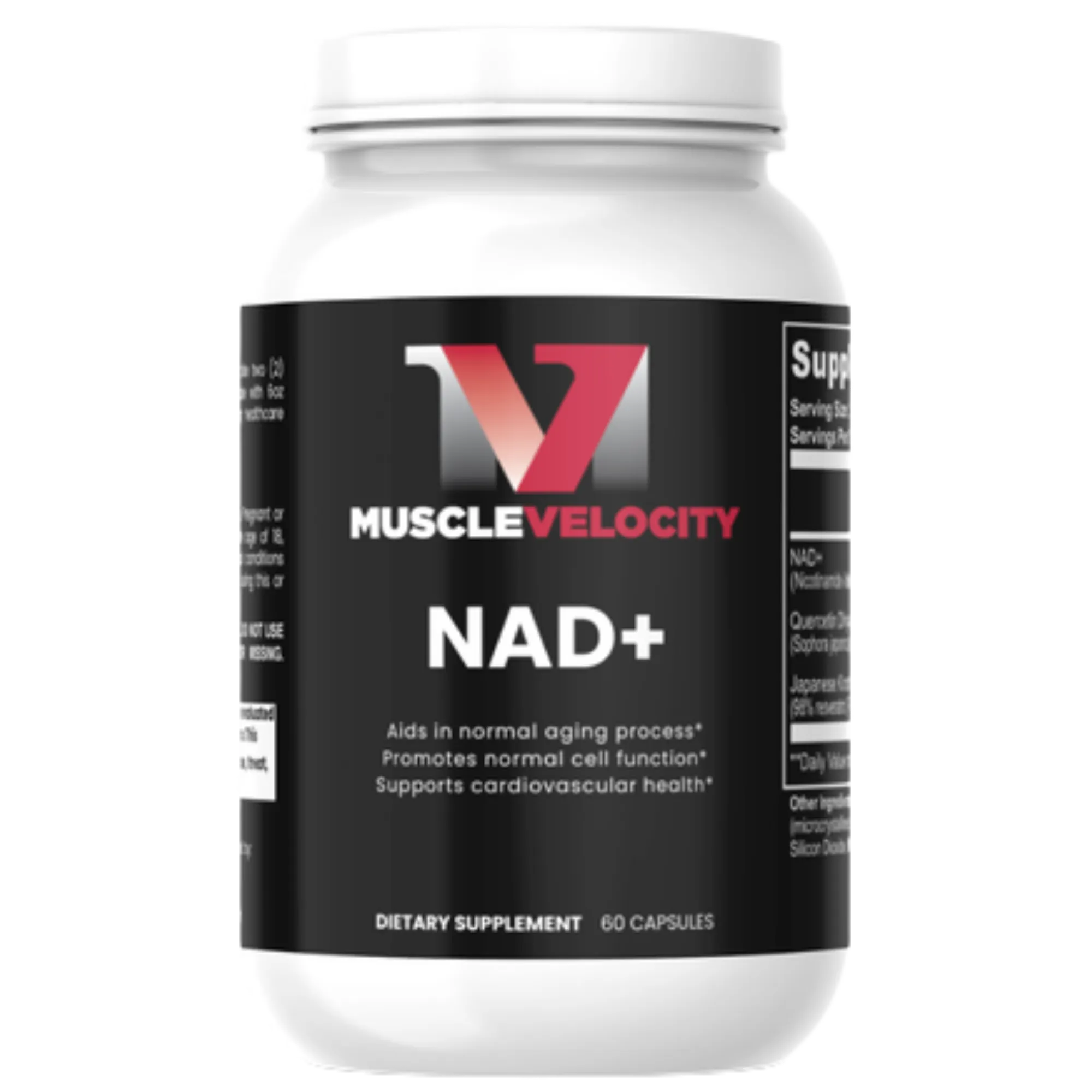
Settle the kids question first, then decide with a clinician. If you also want a daily NAD+ protocol for cellular energy, see what is in ours.
Daily cellular protocol
NAD+
500mg of NAD+ supported by Quercetin and Resveratrol, dosed once daily for cellular energy and metabolic health.
View NAD+Educational content only. A lab result is not a diagnosis, and supplements are not a substitute for medical care. Speak with a qualified healthcare professional about symptoms, results, or medication.
Evidence desk