
When to test
Testosterone runs higher in the morning than in the afternoon. In a Boston study of 66 men, levels in men aged 30 to 40 were 20 to 25% lower at 4 pm than at 8 am. The gap narrowed with age, to about 10% at 70, but did not vanish.
The timing changes results that matter. In that study, 17 men had an afternoon reading under 300 ng/dL (10.4 nmol/L) and normal values at every morning visit.
Food matters too. After a 550 kcal meal, serum testosterone fell 30% at one to two hours compared with fasting, while SHBG stayed flat. The EAU guideline asks for a fasting sample taken between 07:00 and 10:00.
Three ways to test, compared
Each method answers the same question with a different level of confidence. Here is what the evidence supports for each.
- Venous blood draw at a lab: the serum test the Endocrine Society and EAU guidelines describe. Ask for a morning, fasting appointment.
- Finger-prick blood kit: specific methods have been validated. One capillary plasma device correlated with venous plasma at r = 0.950 in 104 volunteers, and a dried blood spot assay correlated strongly with venous serum. But one study found capillary tubes with separator gel read 8 to 14% lower than gel-free tubes. No study here tests home kits as a group.
- Saliva: in men, salivary testosterone correlated with serum free testosterone at only r = 0.43 to 0.71, depending on how it was collected. It is not directly comparable to a blood result.
How to read the report
Start with total testosterone and its unit, ng/dL or nmol/L. Then look at the reference range your lab printed. It reflects that lab's assay, so compare it with caution against charts online.
If total sits near the lower limit, or you have a condition that can change SHBG, the Endocrine Society guideline recommends free testosterone, measured by equilibrium dialysis or calculated with an accurate formula. Our guide to free vs total testosterone explains why.
Repeat before you decide anything
The EAU guideline asks for total testosterone on at least two separate occasions when a result falls below 12 nmol/L (about 346 ng/dL). The Endocrine Society guideline confirms a low result with a second morning, fasting test.
A single low reading is a reason for a second test and a conversation with a clinician. It is not a diagnosis.
Lab checklist
What to check before you trust a result
Drawn before 10 am
The EAU window is 07:00 to 10:00. Later draws can read low.
Taken fasting
In one study, a meal lowered testosterone by 30% one to two hours later.
Venous or validated capillary
Ask how the sample was collected and whether the method was validated against a blood draw.
Same lab and method on repeat
Assays differ. A repeat from the same lab is easier to compare.
A second morning result
The Endocrine Society and EAU want two low morning results, plus symptoms, before calling a level low.
Fit check
Who this guide is—and is not—for
Good fit
- Men about to book a testosterone test who want a result they can trust.
- Men weighing a home kit against a lab draw.
- Men with one low result wondering what comes next.
Poor fit
- Men looking for a kit recommendation. We do not rank or sell test kits.
- Anyone who wants a number to self-diagnose. A clinician reads results alongside symptoms.
Common questions
The questions worth answering
What time of day should I test testosterone?
In the morning. The EAU guideline sets the window at 07:00 to 10:00. In men aged 30 to 40, levels were 20 to 25% lower at 4 pm than at 8 am.
Do I need to fast before a testosterone test?
Yes, per the EAU and Endocrine Society guidelines. In one study, a 550 kcal meal lowered serum testosterone by 30% one to two hours later.
Are at-home testosterone tests accurate?
Some finger-prick methods correlate well with venous blood in lab validations, but kits differ. One study found capillary tubes with separator gel read 8 to 14% lower. Ask how the kit collects blood and whether its method was validated against a blood draw.
Can I test testosterone with saliva?
It is not a reliable stand-in. In men, saliva correlated with serum free testosterone at only r = 0.43 to 0.71, and the authors found it is not directly comparable.
What if my result comes back low?
Repeat it on another morning, fasting, ideally at the same lab. The Endocrine Society and EAU look for two low morning results plus symptoms. A single number is not a diagnosis; take both results to your clinician.
Muscle Velocity standard
Know your numbers. Read them with a clinician.
Book the morning test, repeat it if it reads low, and read both results with your clinician. If you also want a daily NAD+ protocol for cellular energy, see what is in ours.
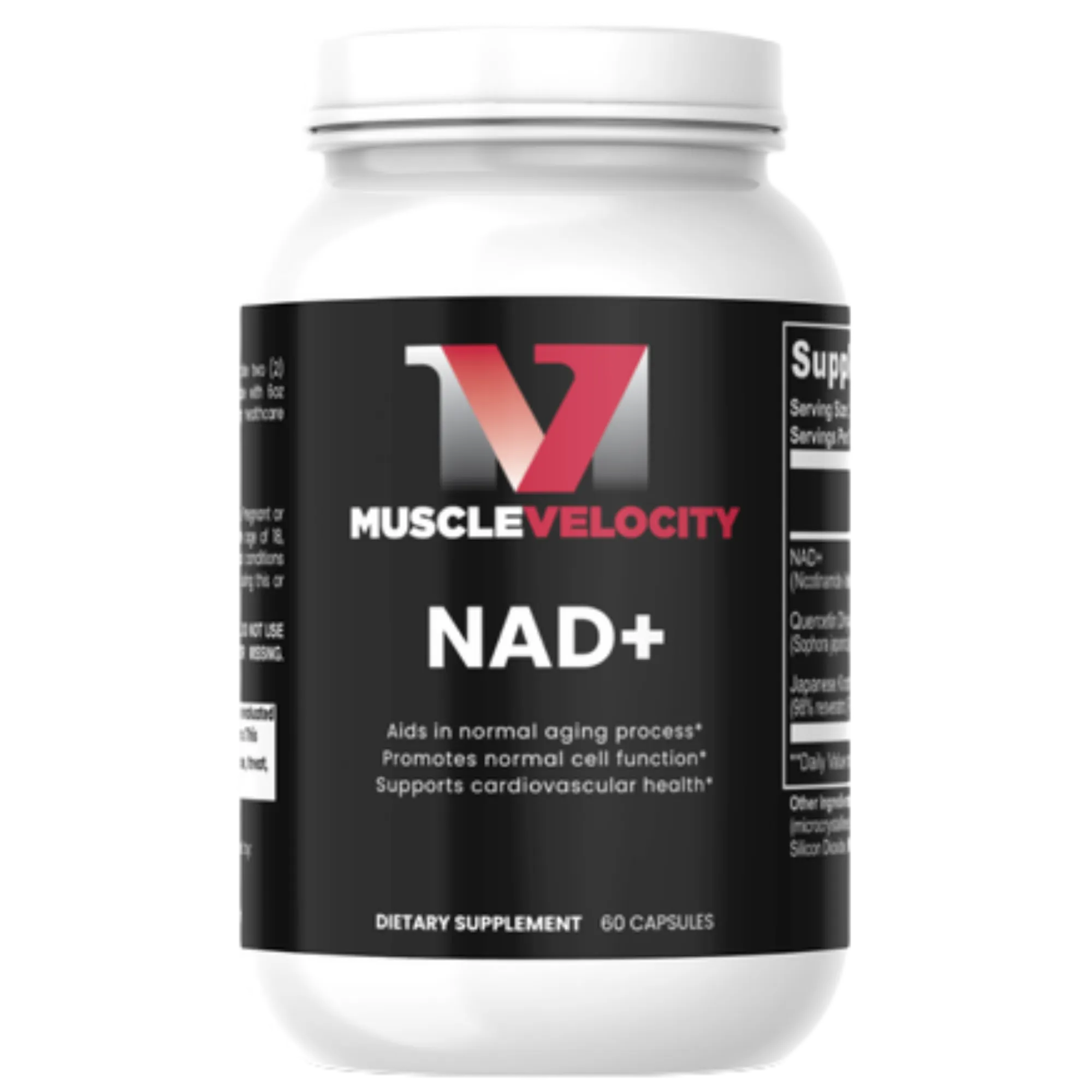
Daily cellular protocol
NAD+
500mg of NAD+ supported by Quercetin and Resveratrol, dosed once daily for cellular energy and metabolic health.
View NAD+Educational content only. A lab result is not a diagnosis, and supplements are not a substitute for medical care. Speak with a qualified healthcare professional about symptoms, results, or medication.
Evidence desk