
How much zinc is in an oyster
The NIH Office of Dietary Supplements says oysters contain more zinc per serving than any other food. Three ounces of raw farmed Eastern oysters hold 32 mg, and three ounces of cooked Pacific oysters hold 28.2 mg. The allowance for adult men is 11 mg a day.
For comparison, the same fact sheet gives 3.8 mg for three ounces of roasted beef sirloin, 3.2 mg for cooked blue crab, and 2.2 mg for an ounce of roasted pumpkin seeds.
The NIH reports that US men over 19 average 13 mg of zinc a day from food alone, above the 11 mg allowance.
What happens to testosterone when zinc runs low
The best-known human data come from a 1996 study by Prasad and colleagues. When four healthy young men ate a zinc-restricted diet for 20 weeks, their serum testosterone fell from 39.9 to 10.6 nmol/L (about 1,151 to 306 ng/dL).
In the same paper, nine older men who were marginally low in zinc took zinc gluconate for three to six months, about 30 mg of elemental zinc a day. Their testosterone rose from 8.3 to 16.0 nmol/L (about 239 to 461 ng/dL).
Those groups were tiny: four men and nine men. A 2023 systematic review of 38 papers, only 8 of them in humans, drew the same direction of effect, and added that it may depend on starting zinc and testosterone, the zinc form, the dose, and how long it was taken.
What happens when zinc is already enough
Koehler and colleagues tested the claim on ZMA, a zinc supplement often sold for testosterone. Their 14 men, aged 22 to 33 and training regularly, already ate 11.9 to 23.2 mg of zinc a day. ZMA raised their serum zinc. It did not change total or free testosterone.
A 2006 study of 10 elite wrestlers found a rise. After four weeks of zinc sulfate, total and free testosterone were higher at rest and after exhausting exercise. The study gave zinc to every man and describes no separate control group, so it cannot separate zinc from other changes over those four weeks.
The study did not report whether the wrestlers were low in zinc. In the one study of men known to eat enough zinc, ZMA changed neither total nor free testosterone.
Who tends to run low on zinc
The NIH names the groups most likely to fall short: people with gastrointestinal disorders, people who have had bariatric surgery, vegetarians and vegans, because phytates in beans and grains reduce absorption, and people with alcohol use disorder.
In NHANES data from 2011 to 2014, 8.6% of US males aged 10 and older had serum zinc below the sufficiency cutoff.
A blood test can help, with limits. The NIH puts healthy serum zinc at 80 to 120 mcg/dL and counts under 74 mcg/dL in men as inadequate, but the number shifts with time of day and does not always track what you eat. One result is not a diagnosis. A clinician reads it alongside your diet and risk factors.
Too much zinc, and the raw oyster problem
The adult upper limit is 40 mg of zinc a day from all sources: food, supplements, and medications combined. The NIH lists nausea, dizziness, headaches, and vomiting as signs of too much, and low copper, low HDL cholesterol, and weaker immunity from taking too much for a long time.
The limit counts every source together. One 3-ounce serving of raw Eastern oysters holds 32 mg on its own, and a zinc pill or multivitamin adds to whatever food supplies.
Raw oysters carry a separate risk. The CDC says most Vibrio infections come from raw or undercooked shellfish, especially oysters, and advises cooking them. About 1 in 5 people with a Vibrio vulnificus infection die, and the CDC flags liver disease as a reason for extra care.
Lab checklist
Before you reach for a zinc pill
Count the zinc you already eat
US men average 13 mg a day from food. The allowance is 11 mg.
Check whether you are in a low-zinc group
Gastrointestinal disorders, bariatric surgery, vegetarian or vegan diets, and alcohol use disorder raise the odds.
Read the elemental zinc on the label
Supplement Facts panels list elemental zinc, not the weight of the whole compound.
Add up every source
Food, beverages, supplements, and medications all count toward the 40 mg upper limit.
Cook the oysters
The CDC ties most Vibrio infections to raw or undercooked shellfish.
Fit check
Who this guide is—and is not—for
Good fit
- Men who heard oysters are good for testosterone and want the honest answer.
- Men on a plant-based diet, or with a digestive condition, wondering if zinc is their gap.
- Men taking ZMA or a zinc pill who want to know what the studies found.
Poor fit
- Anyone looking for a zinc dose to take. We report what studies used and what labels state, not a recommendation.
- Men with a low testosterone result looking for a food fix. Read the result with a clinician first.
Common questions
The questions worth answering
Do oysters increase testosterone?
The evidence runs through zinc. In a small 1996 study, zinc raised testosterone in older men who were low in it. In men who already ate enough zinc, a 2009 study of a zinc supplement found no change in total or free testosterone.
How much zinc is in oysters?
Three ounces of raw farmed Eastern oysters hold 32 mg, and three ounces of cooked Pacific oysters hold 28.2 mg, per the NIH. That is more per serving than any other food. Adult men need 11 mg a day.
How many oysters should I eat for testosterone?
No study sets an oyster count for testosterone. The NIH allowance for men is 11 mg of zinc a day and the upper limit is 40 mg from all sources. One 3-ounce serving of raw Eastern oysters already holds 32 mg.
Does a zinc supplement raise testosterone?
In men who were marginally low in zinc, yes, in one small study. In men who already got enough, a 2009 study of ZMA found no change in total or free testosterone. A 2023 review says the effect depends on starting zinc levels, dose, and duration.
Are raw oysters safe?
The CDC advises against eating raw or undercooked oysters because of Vibrio bacteria. The CDC says most Vibrio infections come from raw or undercooked shellfish, especially oysters. About 1 in 5 people with a Vibrio vulnificus infection die. Cooking them is the CDC's advice.
Muscle Velocity standard
Know your numbers. Read them with a clinician.
Cover zinc with food and read any blood work with your clinician. If you also want a daily NAD+ protocol for cellular energy, see what is in ours.
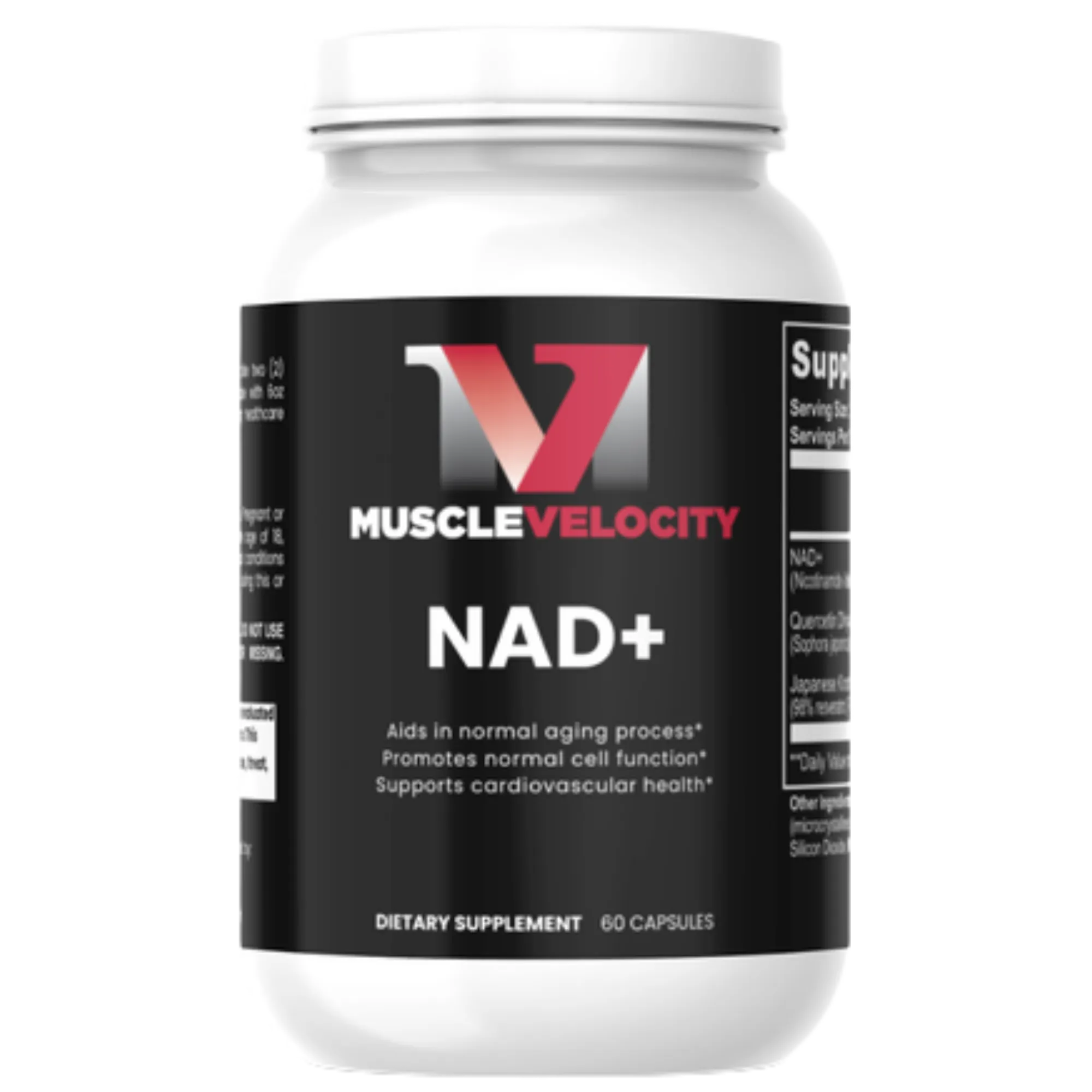
Daily cellular protocol
NAD+
500mg of NAD+ supported by Quercetin and Resveratrol, dosed once daily for cellular energy and metabolic health.
View NAD+Educational content only. A lab result is not a diagnosis, and supplements are not a substitute for medical care. Speak with a qualified healthcare professional about symptoms, results, or medication.
Evidence desk